Why elite athletes, executives, and biohackers are choosing Sermorelin over HGH for recovery, body composition, and anti-aging
You’re training hard, eating clean, optimizing sleep—but recovery is taking longer than it used to. Your body composition is shifting despite consistent effort. Energy that used to be abundant now requires management. And you’re only in your late 30s or early 40s.
Welcome to declining growth hormone production.
By age 40, your growth hormone (GH) levels have dropped 50% or more from their peak. By 60, they’re down 80%. This isn’t just about “aging”—it’s about the biological systems that drive recovery, body composition, sleep quality, and cellular repair gradually shutting down.
Most people accept this decline as inevitable. High performers look for solutions.
Enter Sermorelin: a growth hormone releasing hormone (GHRH) that stimulates your pituitary gland to produce more of your own natural growth hormone. Unlike direct HGH injections that shut down your natural production, Sermorelin works with your body’s systems to restore youthful GH levels safely and sustainably.
Let’s break down exactly what Sermorelin does, why it’s become the preferred choice over HGH for most optimization-focused individuals, and what benefits you can realistically expect.
What Is Sermorelin?
Sermorelin (also known as Sermorelin acetate or GRF 1-29) is a synthetic peptide that mimics growth hormone releasing hormone (GHRH)—the natural hormone your hypothalamus produces to signal your pituitary gland to release growth hormone.
The cascade works like this: Your hypothalamus produces GHRH, which signals your pituitary gland to release growth hormone. That growth hormone then travels throughout your body, triggering various tissues to produce insulin-like growth factor 1 (IGF-1), which drives the actual effects you experience—muscle growth, fat metabolism, tissue repair, and cellular regeneration.
As you age, this cascade breaks down. GHRH production declines, your pituitary becomes less sensitive to the signals it does receive, growth hormone secretion decreases, and all the downstream benefits of growth hormone diminish. The result is everything we associate with aging: slower recovery, declining body composition, reduced energy, poor sleep quality, and accelerated cellular aging.
Sermorelin restores the signal. By supplementing with this GHRH analog, you’re essentially reminding your pituitary gland to do what it used to do naturally when you were younger—produce adequate growth hormone. It’s optimization, not replacement.
Sermorelin vs. HGH: Why Sermorelin Is the Smarter Choice
Before diving into specific benefits, it’s critical to understand why Sermorelin is superior to direct HGH (human growth hormone) injections for most people pursuing long-term optimization.
Human growth hormone injections deliver synthetic GH directly into your system. The advantages are clear: immediate and predictable elevation of growth hormone levels, with dramatic results that can appear within weeks. But the disadvantages are significant and often underestimated.
When you inject growth hormone directly, your body detects the elevated levels and responds by shutting down natural production through negative feedback. Your pituitary essentially goes dormant—why produce something your body already has in abundance? Over time, you become dependent on exogenous GH because your natural production capacity atrophies. It’s the same principle as testosterone replacement: effective, but you’re replacing your natural system rather than optimizing it.
Direct HGH also eliminates your body’s natural pulsatile release pattern. Growth hormone should pulse—highest during deep sleep, with smaller pulses throughout the day in response to exercise, fasting, and other stimuli. Constant elevation from injections disrupts this natural rhythm, potentially leading to side effects like joint pain, edema, and insulin resistance. And then there’s the cost: legitimate pharmaceutical HGH runs $500 to $1,500 or more per month, with significant regulatory scrutiny and legal restrictions.
Sermorelin takes a fundamentally different approach. Instead of replacing your growth hormone, it restores the signal that tells your body to produce it. Your pituitary maintains its function and continues to release GH in the natural pulsatile pattern your body evolved to use—highest during deep sleep, as it should be. Your body’s regulatory feedback systems stay intact, preventing excessive elevation or the dependency that comes with direct hormone replacement.
The trade-off is speed. Sermorelin’s effects are more gradual than HGH injections. You won’t see the dramatic immediate changes that direct GH provides. But for long-term optimization without dependency, shutdown of natural production, or excessive risk, Sermorelin is the superior choice for most people. You’re working with your biology, not against it.
The Science: How Sermorelin Works in Your Body
Understanding the timeline and mechanism helps set realistic expectations for what Sermorelin can deliver.
Within minutes of injection, Sermorelin reaches your pituitary gland and triggers growth hormone release approximately 15 to 30 minutes later. This pulse mimics your natural GH secretion pattern—a sharp rise followed by a gradual decline over several hours, exactly as your body designed the system to work. Peak GH levels occur 30 to 60 minutes post-injection, then decline naturally.
Most protocols recommend taking Sermorelin before bed, which takes advantage of timing. Your body naturally surges growth hormone during deep sleep, and Sermorelin enhances this existing process, amplifying your body’s own recovery mechanisms rather than introducing something foreign to your natural rhythms.
The first benefits most people notice appear within two to four weeks and center around sleep quality. Growth hormone is intimately connected to sleep architecture, and restoring GH often improves sleep depth and quality significantly. You fall asleep more easily, experience fewer nighttime wakings, and wake more refreshed. Many users report more vivid dreams, which indicates better REM sleep cycles.
Around the same timeframe, subtle improvements in energy levels and post-workout recovery begin to emerge. You’re not suddenly Superman, but you notice you’re bouncing back faster from intense training sessions. The crushing fatigue that used to follow hard workouts becomes more manageable. Your baseline energy throughout the day improves—not dramatically, but noticeably.
The visual changes start appearing between weeks four and twelve. This is when body composition begins to shift in measurable ways. Lean muscle mass increases even without changing your training protocol, stubborn body fat (particularly abdominal fat) starts to decrease, and muscle definition improves. These changes accelerate with proper training and nutrition, but they occur to some degree even in people who maintain their existing habits.
Enhanced collagen production leads to visible improvements in skin quality around this timeframe as well. Skin becomes thicker and more elastic, fine lines diminish, and overall complexion improves. Hair quality may improve, and nails grow stronger. These cosmetic benefits reflect underlying improvements in cellular health and regeneration.
Long-term users—those continuing Sermorelin for six months or longer—experience sustained and often dramatic improvements in body composition. Many achieve physiques they haven’t seen since their twenties, without drastically changing diet or training intensity. Bone density gradually improves as growth hormone stimulates osteoblast activity, critical as you age and bone loss accelerates. Metabolic function continues to optimize, with better insulin sensitivity, improved lipid profiles, and enhanced nutrient processing. Some users report cognitive benefits including improved memory, focus, and processing speed, reflecting GH’s neuroprotective effects.
Sermorelin Benefits: What to Realistically Expect
Let’s break down the specific benefits by category, with realistic expectations based on clinical use and real-world results.
Enhanced Recovery from Training and Stress
Growth hormone accelerates protein synthesis while simultaneously reducing protein breakdown, creating an optimal environment for tissue repair. This means faster recovery from both physical training and the general physiological stress of demanding careers and lifestyles.
Within two to four weeks, most users notice reduced muscle soreness after intense workouts. That deep, debilitating delayed onset muscle soreness (DOMS) that used to last three or four days now resolves in one or two. Recovery between training sessions shortens noticeably—you can train with higher frequency without accumulating fatigue. Your body simply handles training volume better, tolerating stress that would have previously led to overtraining symptoms.
Injury healing accelerates as well. Soft tissue injuries that typically take weeks to resolve often heal significantly faster. This doesn’t mean Sermorelin prevents injuries, but the repair processes work more efficiently when growth hormone levels are optimized. Beyond physical recovery, general fatigue from daily stress decreases. The crushing exhaustion that high-stress careers and demanding schedules create becomes more manageable.
Athletes training intensely see the most dramatic recovery improvements, but anyone over 35 experiencing declining recovery capacity benefits substantially. High performers under chronic stress—executives, entrepreneurs, parents managing multiple responsibilities—often report that Sermorelin provides the recovery capacity to sustain their demanding lifestyles without constant burnout.
Improved Body Composition: Increased Muscle, Decreased Fat
Growth hormone is both lipolytic (breaks down fat) and anabolic (builds muscle tissue). It increases lean body mass while simultaneously promoting fat oxidation, particularly targeting visceral and stubborn subcutaneous fat that resists diet and exercise alone.
The changes develop gradually but can be dramatic over time. Typical users see lean muscle mass increases of two to five pounds over three to six months, even without changing training protocols. Body fat reduction of three to seven percentage points is common, with the most noticeable changes occurring in abdominal fat and other stubborn areas. Muscle definition and “hardness” improve substantially—you look leaner and more muscular at the same overall body weight.
One of the most compelling benefits is the improved ease of maintaining a lean physique. People who previously struggled to stay lean despite strict diet and training find that body composition maintenance becomes almost effortless. The body seems to naturally gravitate toward a leaner, more muscular state when growth hormone levels are optimized.
It’s crucial to understand that Sermorelin enhances what you’re already doing—it doesn’t replace effort. If you’re training consistently and eating reasonably well, results can be transformative. If you’re sedentary with poor nutrition, results will be minimal. This isn’t magic; it’s biological optimization that amplifies your existing efforts.
Visible changes typically begin around week six to eight, with significant transformation evident by month four to six. The timeline varies based on baseline body composition, training intensity, and nutritional quality, but the trajectory is consistent: gradual, sustainable improvement that continues as long as you maintain the protocol.
Better Sleep Quality and Deeper Sleep Cycles
The relationship between growth hormone and sleep is bidirectional and reinforcing. Growth hormone enhances sleep quality, particularly deep sleep stages, and better sleep naturally increases GH production. Sermorelin creates a positive feedback loop that benefits both systems.
Sleep improvements often appear within one to two weeks, making this one of the first noticeable benefits for most users. Falling asleep becomes easier, even for people who typically struggle with sleep initiation. Once asleep, you stay asleep—nighttime wakings decrease substantially. The quality of sleep improves dramatically, with more time spent in deep, restorative stages rather than light, fragmented sleep.
Waking becomes more natural and refreshing rather than the groggy struggle many people experience. Daytime fatigue decreases as sleep becomes genuinely restorative rather than just time spent unconscious. Many users report more vivid dreams, which indicates better REM sleep—a critical sleep stage for memory consolidation and cognitive function that often degrades with age.
For executives with high-stress schedules, shift workers dealing with irregular sleep patterns, or anyone experiencing age-related sleep decline, the sleep benefits alone often justify Sermorelin use. Quality sleep affects every aspect of performance and health, and Sermorelin’s impact on sleep architecture can be transformative.
Increased Energy and Reduced Fatigue
Growth hormone affects mitochondrial function—the cellular powerhouses that produce energy. It enhances metabolic efficiency and supports overall cellular health. When GH levels decline with age, cellular energy production degrades, manifesting as the chronic fatigue and reduced vitality that many people accept as normal aging.
Restoring growth hormone through Sermorelin combats this cellular aging process. Energy improvements typically emerge subtly within two to four weeks, then become more pronounced over two to three months. The changes aren’t like stimulant-driven energy spikes and crashes—rather, you experience more consistent energy throughout the day with fewer afternoon crashes.
Long workdays or intense schedules become more tolerable. The mental and physical energy reserves you draw on throughout demanding days seem deeper and more sustainable. General fatigue and malaise decrease noticeably. Stress tolerance improves—situations that would have previously left you depleted now feel more manageable.
High performers in demanding roles—whether entrepreneurial, executive, or athletic—often report that Sermorelin provides the sustained energy capacity their lifestyles demand without relying on increasing caffeine intake or other stimulants that ultimately create dependency and diminishing returns.
Anti-Aging Effects: Skin, Hair, and Collagen Production
Growth hormone stimulates collagen synthesis and cellular regeneration throughout the body. Collagen is the structural protein that determines skin thickness, elasticity, and appearance, as well as the health of hair, nails, and connective tissues. As growth hormone declines with age, collagen production decreases, leading to thinner skin, increased wrinkles, and declining tissue quality.
Sermorelin reverses this process to a significant degree. Cosmetic changes typically appear around month two to four, with continued improvement over six to twelve months. Skin becomes noticeably thicker and more elastic, with reduced fine lines and wrinkles. The texture and tone of skin improves, often leading to comments from others about looking more youthful or “well-rested” even when nothing else has changed.
Hair may become thicker and grow more robustly, though results vary widely between individuals. Nails grow stronger and faster. The overall appearance shifts toward a more youthful, vital presentation that reflects the underlying improvements in cellular regeneration and tissue health.
While these cosmetic benefits are often viewed as secondary to performance improvements, they reflect genuine anti-aging at the cellular level. The same processes that improve skin appearance are also improving connective tissue health, joint function, and overall tissue quality throughout your body.
Enhanced Immune Function and Illness Resistance
Growth hormone supports thymus function, which is central to immune system health and T-cell production. It enhances white blood cell production and improves overall immune surveillance—your body’s ability to identify and eliminate threats ranging from viral infections to potentially cancerous cells.
The immune improvements develop gradually over two to six months of consistent use. Most users notice they get sick less frequently, particularly during cold and flu season when exposure to pathogens is high. When illness does occur, recovery is noticeably faster. Wounds and injuries heal more quickly due to enhanced tissue repair processes.
For frequent travelers regularly exposed to airports and hotels, people working in environments with high illness exposure, or anyone with weakened immune function from chronic stress, the immune benefits of Sermorelin can significantly reduce health-related downtime. High performers who can’t afford to lose productivity to illness find this particularly valuable.
Improved Bone Density and Joint Health
Growth hormone stimulates osteoblasts—the cells responsible for building new bone tissue. It also enhances calcium retention and supports overall bone metabolism. As GH levels decline with age, bone density decreases, leading to osteoporosis risk and increased fracture susceptibility, particularly in women post-menopause but affecting men as well.
Sermorelin helps reverse or slow this process. Bone density improvements require six to twelve months or longer to measure via DEXA scan, but the process begins immediately. For those at risk of osteoporosis, with family history of bone loss, or simply concerned about maintaining skeletal health into old age, Sermorelin provides meaningful protection.
Joint comfort and mobility often improve within two to three months. Growth hormone supports cartilage health and synovial fluid production, leading to reduced joint pain from training or age-related wear. Athletes dealing with joint issues often report substantial improvements in comfort and function, allowing them to train more consistently without the nagging joint pain that previously limited activity.
Metabolic Improvements: Insulin Sensitivity and Lipid Profile
The relationship between growth hormone and metabolism is complex and somewhat paradoxical. Excessive growth hormone can cause insulin resistance and metabolic problems, but restoring physiological GH levels in deficient individuals often improves metabolic function substantially.
Within three to six months, bloodwork typically reveals favorable metabolic changes. Blood sugar regulation improves, with better glucose handling after meals and reduced fasting glucose levels. Insulin sensitivity increases, meaning your body requires less insulin to manage blood sugar—a key marker of metabolic health and longevity.
Lipid profiles often improve as well. HDL cholesterol (the “good” cholesterol) typically increases, while LDL cholesterol and particularly triglycerides decrease. These changes reduce cardiovascular disease risk and reflect improved overall metabolic function.
For those with prediabetes, metabolic syndrome, or declining metabolic health evident in bloodwork trends, Sermorelin can be a powerful intervention. Combined with proper nutrition and exercise, it helps restore the efficient metabolism characteristic of youth rather than the increasingly dysfunctional metabolism that develops with age.
Cognitive Function and Neuroprotection
Growth hormone receptors exist throughout the brain, and GH plays important roles in brain health. It supports neurogenesis—the formation of new neurons—and enhances synaptic plasticity, which is your brain’s ability to form and reorganize connections. GH also provides neuroprotection against age-related cognitive decline and may reduce risk of neurodegenerative diseases.
Cognitive benefits often appear within four to eight weeks and continue improving over months. Users report improved memory and recall, particularly for recent events and new information. Focus and concentration become sharper and more sustainable. Mental clarity improves—that “brain fog” many people experience in their 40s and beyond often diminishes substantially.
Processing speed increases, making complex problem-solving and decision-making faster and more efficient. Some users report mood improvements as well, including reduced anxiety and better stress resilience, likely due to GH’s effects on neurotransmitter systems and overall brain health.
For knowledge workers, executives making complex decisions under pressure, or anyone experiencing age-related cognitive decline, the cognitive benefits of Sermorelin can be as valuable as the physical improvements. Maintaining cognitive performance is essential for sustained high performance across decades.
Sermorelin Dosing: Protocols and Administration
Understanding proper dosing and administration maximizes benefits while minimizing side effects and ensuring safe, effective use.
The typical starting dose ranges from 200 to 300 micrograms per day, administered subcutaneously—just under the skin, similar to how diabetics inject insulin. The injection itself uses a very small needle and causes minimal discomfort. Most people inject in the abdomen, thigh, or upper arm, rotating sites to prevent irritation.
Timing matters significantly for optimal results. Most protocols recommend evening injection 30 to 60 minutes before sleep. This timing takes advantage of your body’s natural growth hormone surge during deep sleep, amplifying the pulse rather than creating artificial elevation at inappropriate times. Some users experiment with morning or post-workout timing, but evening administration before bed consistently produces the best results for most people.
Frequency is typically daily injection, though some protocols use five days on with two days off to prevent potential receptor desensitization. The daily protocol is most common and generally produces the most consistent results, but both approaches have advocates based on individual response and preferences.
Injectable Sermorelin is the most common form and provides the highest bioavailability with the most consistent results. It does require self-injection, which intimidates some people initially but most find much easier than expected after the first few attempts. The needles are tiny, the injection is subcutaneous rather than intramuscular (less painful), and the process takes less than a minute once you’re familiar with it.
Sublingual Sermorelin offers an alternative for those who are truly needle-averse. The medication is placed under the tongue for mucosal absorption, eliminating the need for injection. Bioavailability may be somewhat lower than injectable forms, and results can be less consistent, but for people who simply won’t use injectable medications, it provides a viable alternative.
Some formulations combine Sermorelin with glycine, an amino acid that may enhance growth hormone release and provides independent benefits for sleep quality and recovery. The combination can be more effective than Sermorelin alone for some users, though it’s not necessary—plain Sermorelin works well for most people.
Regarding long-term use and cycling, Sermorelin differs significantly from compounds like testosterone that suppress natural production. Because Sermorelin stimulates rather than replaces your natural GH, many people use it continuously for months or years without the need for cycling or concern about shutdown of natural production. Some practitioners recommend periodic breaks—such as one month off every three to four months—to prevent potential receptor desensitization, but this isn’t universally agreed upon and many users see sustained benefits with continuous use.
For assessing results, a minimum of three to six months is recommended. The changes Sermorelin produces are gradual and cumulative. Evaluating effectiveness after just a few weeks will lead to premature disappointment, while giving it a full trial period allows the various benefits to manifest and compound over time.
Sermorelin Side Effects: What to Expect
Sermorelin is generally well-tolerated compared to direct HGH injections, but understanding potential side effects helps set realistic expectations and allows for proper management if they occur.
The most common side effects are mild and often temporary. Injection site reactions—redness, swelling, or mild irritation where you inject—are common initially but usually resolve within 24 to 48 hours. Rotating injection sites minimizes this issue. Most people find that injection site reactions decrease as their body adapts to the routine.
Some users experience flushing or warmth shortly after injection, particularly in the face and chest. This sensation typically lasts 10 to 30 minutes and is more common when first starting Sermorelin. It’s generally harmless and often resolves with continued use as your body adjusts to the medication.
Mild to moderate headaches can occur, particularly during the first one to two weeks. These are usually temporary and resolve as your body adapts. Staying well-hydrated and ensuring adequate electrolyte intake can help minimize headaches.
Occasional nausea or mild stomach discomfort may occur, especially when taking Sermorelin on an empty stomach as recommended. This is typically mild and temporary, resolving quickly in most cases. Taking the injection at a consistent time each evening helps your body establish a routine that minimizes digestive upset.
Rare users report dizziness or lightheadedness immediately following injection. This typically resolves within minutes and becomes less common with continued use.
Less common but more significant side effects include mild water retention causing temporary bloating. This is usually minimal compared to HGH and often resolves as your body adapts. Rare reports exist of peripheral tingling or numbness in hands or feet, though this is uncommon and typically temporary.
Some users report feeling hyperactive or overly alert, particularly if injecting too early before bed. If this occurs, adjusting timing usually resolves the issue—injecting closer to actual bedtime rather than an hour before often helps.
Sermorelin is contraindicated in several situations. Anyone with active cancer or history of cancer should not use growth hormone releasing compounds, as GH can potentially promote tumor growth. It’s also contraindicated in proliferative diabetic retinopathy, during pregnancy or breastfeeding, in cases of uncontrolled diabetes, or during acute critical illness.
Caution is advised for those with history of pituitary tumors or disorders, poorly controlled diabetes, or Prader-Willi syndrome. Anyone under 18 should not use Sermorelin, as natural growth hormone levels are already high during youth and adolescence.
Sermorelin and Bloodwork: Monitoring Your Optimization
Proper use of Sermorelin requires baseline and follow-up bloodwork to ensure safety and optimize dosing for your individual response.
Before starting, comprehensive baseline testing provides the foundation for tracking improvements. Essential markers include comprehensive metabolic panel assessing liver and kidney function, fasting glucose and hemoglobin A1c evaluating metabolic health, complete thyroid panel (growth hormone and thyroid interact, and both should be optimized), and lipid panel tracking cardiovascular risk factors.
Testosterone testing for men is recommended if combining Sermorelin with TRT or considering future hormone optimization. For women, estrogen and progesterone context matters for understanding overall hormonal status. DHEA testing can be valuable as another age-related hormone often optimized alongside growth hormone. A complete blood count provides general health baseline markers.
Follow-up testing occurs at strategic intervals. At six to eight weeks after starting Sermorelin, bloodwork assesses your response and ensures appropriate improvements without excessive elevation. This early check allows dosing adjustments based on actual physiological response rather than guessing.
At three to six months, a comprehensive panel tracks metabolic changes and overall health impacts. This provides data on body composition improvements (which can be measured more directly via DEXA scan if desired), metabolic function, and cardiovascular health markers.
Ongoing monitoring continues with periodic testing to maintain optimization over time. Annual comprehensive panels monitor overall health and ensure no negative trends develop. The goal is maintaining levels typical of healthy young adults—restoration, not excessive elevation beyond physiological ranges.
Stacking Sermorelin: Combining with Other Optimization Protocols
Sermorelin often works synergistically with other treatments, creating benefits greater than any single intervention alone.
Combining Sermorelin with testosterone replacement therapy (TRT) is common and highly effective. Growth hormone and testosterone work through different mechanisms but enhance each other’s effects on muscle growth, fat loss, and recovery. The combined benefits include superior body composition changes compared to either hormone alone, enhanced recovery and performance capacity, better energy and vitality, and improved mood and cognitive function. This combination requires careful monitoring of multiple hormone systems via bloodwork, but for men with both low testosterone and declining growth hormone, the synergy is powerful.
For women, combining Sermorelin with hormone replacement therapy (estrogen and progesterone) provides similar synergistic benefits. The growth hormone enhancement of body composition and recovery complements the mood, energy, and bone density benefits of female HRT, creating comprehensive hormone optimization.
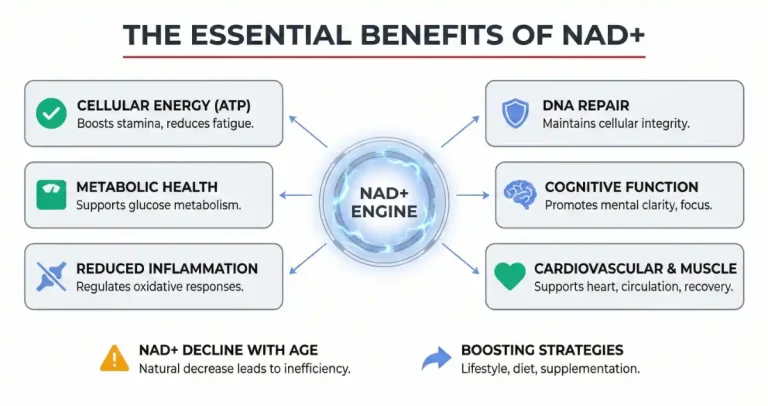
Sermorelin combined with NAD+ therapy targets cellular aging through complementary mechanisms. NAD+ enhances mitochondrial function and cellular energy production while Sermorelin restores growth hormone-mediated tissue repair and regeneration. Together, they provide enhanced cellular energy and recovery, superior anti-aging effects, improved metabolic function, and better overall vitality than either compound alone.
For metabolic optimization, Sermorelin can be combined with Metformin. Sermorelin improves body composition while Metformin enhances insulin sensitivity and activates AMPK, a longevity pathway associated with caloric restriction benefits. The combination produces superior metabolic health improvements, enhanced fat loss, better glucose regulation, and potential longevity benefits through multiple complementary mechanisms.
Getting Started with Sermorelin: What You Need to Know
If you’re considering Sermorelin based on the benefits outlined above, here’s the practical roadmap for getting started safely and effectively.
The first step is medical consultation and baseline testing. Find a provider familiar with performance optimization rather than just traditional anti-aging approaches targeting elderly patients. During consultation, discuss your specific symptoms and optimization goals, current health status and any medications you’re taking, and whether Sermorelin is appropriate for your situation.
Obtain baseline bloodwork covering the essential markers discussed earlier. This establishes where you’re starting from and provides the data needed to track improvements over time. Without baseline data, you’re flying blind regarding whether Sermorelin is actually working for you.
Sermorelin requires a prescription from a licensed physician. After consultation and bloodwork review, if Sermorelin is deemed appropriate, you’ll receive a prescription for pharmaceutical-grade Sermorelin from a licensed US pharmacy. Quality matters significantly—avoid “research chemical” sources or overseas compounds that may be contaminated or underdosed. This medication is going into your body; insist on pharmaceutical quality.
Cost expectations typically range from $150 to $250 per month depending on dose and source. This is substantially more affordable than HGH (which runs $500 to $1,500+ monthly) while providing sustainable, safe optimization. Many people find Sermorelin costs are covered by HSA or FSA accounts as a prescription medication for a legitimate medical purpose.
Learn proper administration through training provided by your prescribing physician or clinic. Subcutaneous injection is simple—similar to insulin injection—and most providers offer instructional videos or hands-on training. Supplies are typically included: syringes, needles, alcohol wipes, and sharps container for safe disposal.
Timing and consistency matter. Inject 30 to 60 minutes before bed for optimal results, and maintain consistent timing to maximize effectiveness. Storage requirements are straightforward: unmixed vials can be kept at room temperature or refrigerated per specific product instructions, while mixed vials require refrigeration and should be used within 30 days typically.
Monitor both subjective improvements and objective data. Track sleep quality, energy levels, recovery from training, mood, and general well-being. Document body composition changes through scale weight, progress photos, and measurements. Note training performance improvements as they occur.
Follow-up bloodwork at appropriate intervals provides objective data on your response. Testing at six to eight weeks assesses initial response and allows dosing adjustment if needed. Comprehensive panels at three to six months track metabolic and health changes. Ongoing periodic testing maintains optimization and ensures long-term safety.
Work with your prescribing physician to adjust protocols based on your response. If response is suboptimal, dosing may need to increase. If side effects occur or markers suggest excessive response, dosing should decrease. This individualized approach ensures you receive maximum benefit with minimum risk.
Sermorelin Benefits: The Bottom Line
Sermorelin isn’t a magic pill that reverses aging or transforms you into a superhuman overnight. It’s a targeted, evidence-based intervention that restores one declining hormone system—growth hormone production—to more youthful, physiological levels.
What Sermorelin accomplishes is significant: it stimulates natural growth hormone production without shutting down your pituitary gland or creating dependency. It enhances recovery from training and stress, allowing you to sustain higher performance levels. Body composition improves through increased lean muscle mass and decreased body fat, particularly stubborn areas like abdominal fat. Sleep quality and depth improve dramatically for most users, providing the restorative rest essential for all other aspects of health. Energy levels increase and fatigue decreases, supporting demanding lifestyles and careers. Anti-aging benefits manifest through improved collagen production, skin quality, and cellular regeneration. Metabolic function improves through better insulin sensitivity, favorable lipid changes, and enhanced nutrient processing. Bone density gradually increases, protecting against osteoporosis and fractures. Immune function strengthens, reducing illness frequency and accelerating recovery. Cognitive function often improves, with better memory, focus, and mental clarity.
What Sermorelin doesn’t do is equally important to understand. It doesn’t replace the need for proper training, quality nutrition, adequate sleep, and stress management. It doesn’t work instantly—meaningful results take weeks to months to fully manifest. It doesn’t provide the dramatic immediate effects of direct HGH injections, but that’s the trade-off for safety, sustainability, and preservation of natural hormone production. It doesn’t fix underlying health issues unrelated to growth hormone decline—it’s one piece of comprehensive optimization, not a cure-all.
Who benefits most from Sermorelin? Anyone over 35 experiencing declining recovery, shifting body composition, reduced energy, or poor sleep quality. Athletes seeking enhanced performance and recovery capacity without the risks and dependency of HGH. High performers under chronic stress needing better recuperation to sustain demanding lifestyles. People focused on longevity and healthspan optimization who want to address age-related hormone decline proactively. Those seeking anti-aging benefits alongside performance enhancement through a safe, sustainable approach.
The strategic approach recognizes that Sermorelin works best as part of comprehensive optimization. Proper training that challenges your body appropriately, quality nutrition providing adequate protein and supporting recovery, quality sleep that Sermorelin will enhance further, effective stress management preventing chronic cortisol elevation, and potentially other treatments like TRT or metabolic optimization depending on individual needs. Sermorelin is a powerful tool, but tools only produce results when wielded properly within a comprehensive strategy.