
What Is a WBC Count?
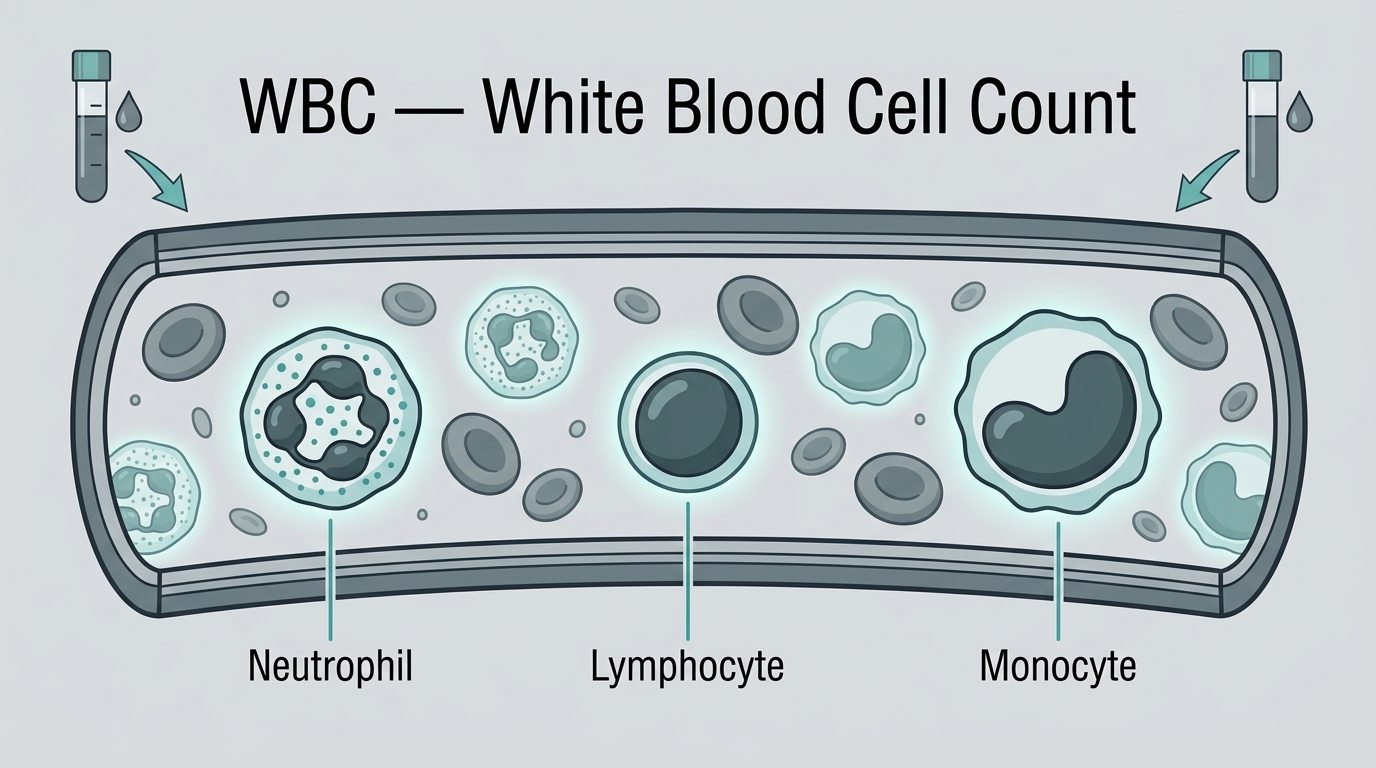
Your WBC count — white blood cell count — is the total number of immune cells circulating in your blood. White blood cells are your body’s defense force, identifying and destroying bacteria, viruses, parasites, and abnormal cells. The WBC count is one of the most fundamental measurements on a complete blood count (CBC) panel and provides a critical window into your immune system’s current state.
A WBC count doesn’t just tell you whether you’re fighting an infection — it can reveal chronic inflammation, autoimmune activity, allergic responses, and even bone marrow issues. For performance-focused individuals, tracking WBC trends over time can reveal patterns of overtraining, chronic stress, and immune suppression. Apex Blood includes WBC and a full differential as part of our comprehensive blood testing panel.
Normal WBC Range
The standard reference range for WBC is 4.5 to 11.0 × 10³/µL for adults. However, what’s optimal for performance and longevity may be narrower. Most high-performing individuals maintain WBC in the 5.0–7.5 range. Athletes often run slightly lower due to physiological dilution from plasma expansion, known as sports pseudoanemia.
WBC is measured in thousands per microliter (K/µL or × 10³/µL). The full CBC differential breaks total WBC down into five main subtypes: neutrophils, lymphocytes, monocytes, eosinophils, and basophils — each serving distinct immune functions.
What Does High WBC Mean?
Elevated WBC — called leukocytosis — can signal the body is mounting an immune response. Common causes include bacterial infection, viral illness, inflammatory conditions, steroid use, smoking, obesity, and severe psychological stress. In athletes, intense training sessions can transiently spike WBC. Chronic elevation, even within the upper end of the “normal” range, correlates with increased cardiovascular risk and systemic inflammation.
If your WBC is consistently elevated, Apex Blood’s licensed medical team can help identify the root cause and guide you toward targeted intervention — including our longevity and anti-aging protocols that address chronic inflammation.
What Does Low WBC Mean?
A low WBC count — leukopenia — means fewer immune cells are circulating, which can increase susceptibility to infection. Causes include viral infections (particularly those that directly attack WBC), autoimmune disease, nutritional deficiencies (especially B12 and folate), bone marrow suppression, and some medications. Endurance athletes sometimes show borderline-low WBC due to hemodilution.
WBC and Performance Optimization
Tracking WBC alongside training load gives you a real-time readout of immune stress. Overtraining suppresses WBC and its subtypes — particularly natural killer cells within the lymphocyte population — increasing illness risk right before competition. Our performance and recovery panel pairs WBC with key recovery biomarkers so you can train hard without compromising immunity.
Chronic WBC elevation, on the other hand, often reflects low-grade inflammation from poor sleep, processed food, excess body fat, or emotional stress. If body composition is a concern, our weight loss program incorporates metabolic testing including inflammatory markers.
Test Your WBC at Apex Blood
Your WBC count is included in every Apex Blood comprehensive panel along with a full five-part differential. Our licensed medical professionals review your results and provide personalized context — not just a number, but an explanation of what it means for your health and performance. See everything we test and book your panel today.