
What Are Eosinophils?
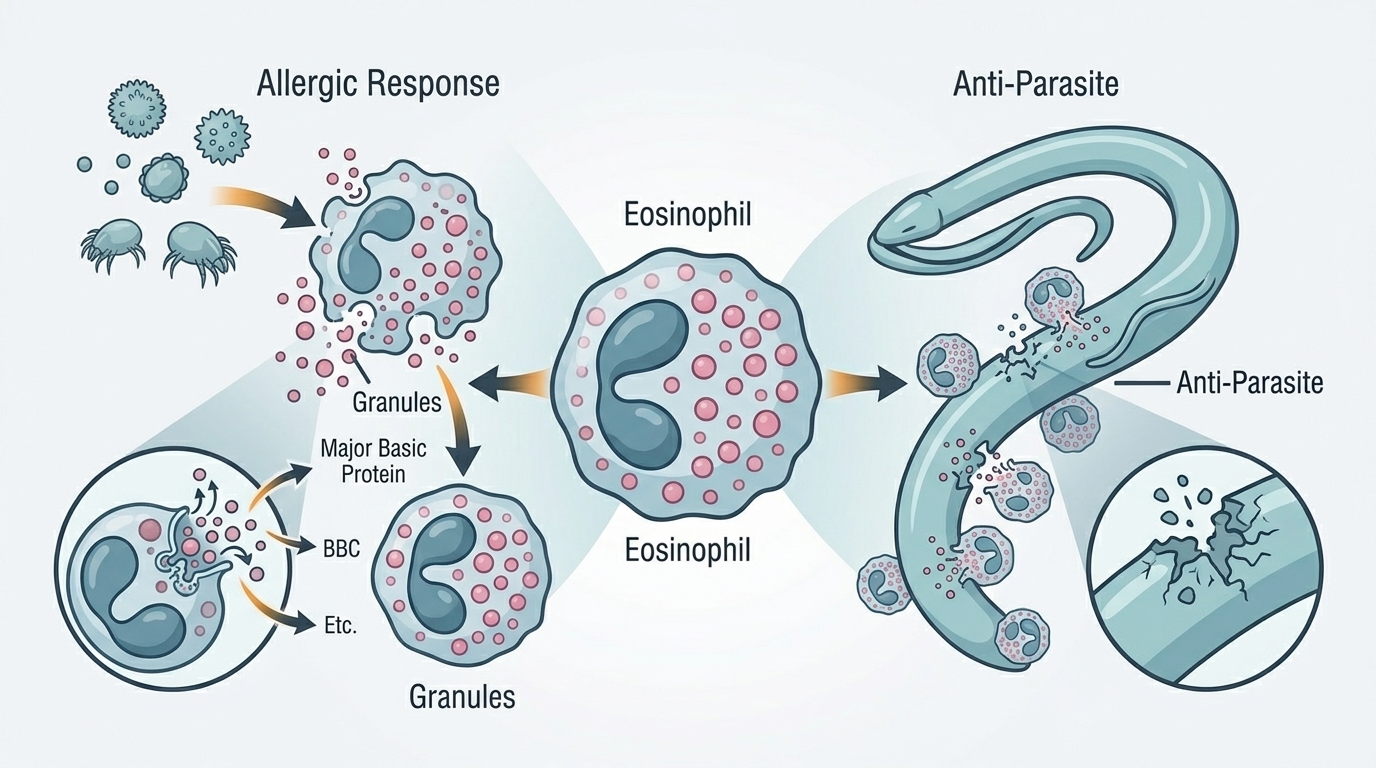
Eosinophils are a type of white blood cell specialized for fighting parasitic infections and mediating allergic responses. Recognizable by their distinctive bi-lobed nucleus and bright pink cytoplasmic granules on a blood smear, eosinophils account for just 1–4% of your total WBC count under normal conditions. They are produced in the bone marrow and spend most of their lives in tissues — particularly in the gut lining and respiratory tract — rather than in circulation.
Eosinophil count is reported both as a percentage and as an absolute count (Eos Absolute) on the Apex Blood comprehensive blood panel. Elevated eosinophils are one of the most clinically useful signals for identifying hidden allergies, inflammatory conditions, and parasitic exposure.
Normal Eosinophil Range
The standard reference range for eosinophils is 0.05 to 0.5 × 10³/µL absolute count, or 1–4% of WBC. Eosinophils above 0.5 K/µL constitute eosinophilia. Mild eosinophilia (0.5–1.5 K/µL) is most commonly driven by allergies. Moderate (1.5–5.0) suggests parasitic infection or drug reactions. Severe (>5.0) can cause organ damage and requires urgent evaluation.
High Eosinophils (Eosinophilia)
The most common cause of elevated eosinophils in developed countries is allergic disease — seasonal allergies, asthma, eczema, and food sensitivities all drive eosinophil elevation. Parasitic infections (intestinal helminths, roundworm, etc.) are the leading cause worldwide. Other causes include certain medications (NSAIDs, antibiotics, anticonvulsants), eosinophilic esophagitis, inflammatory bowel disease, and rare hypereosinophilic syndromes.
Chronically elevated eosinophils — even mild elevation — are associated with increased inflammation and worse cardiovascular outcomes. If you have elevated eosinophils alongside respiratory symptoms or gut issues, connecting with the Apex Blood medical team can help identify the source. Our longevity protocols address inflammatory drivers that compromise long-term health.
Low Eosinophils
Low eosinophil counts (eosinopenia) most commonly occur during acute bacterial infections, as the body shifts resources to neutrophil production, and with high cortisol levels — either from physiological stress or corticosteroid medications. In isolation, low eosinophils are rarely clinically significant.
Test Your Eosinophils at Apex Blood
Eosinophil percentage and absolute count are included in every Apex Blood comprehensive panel. Our 60+ biomarker CBC with differential gives you the complete immune picture.