
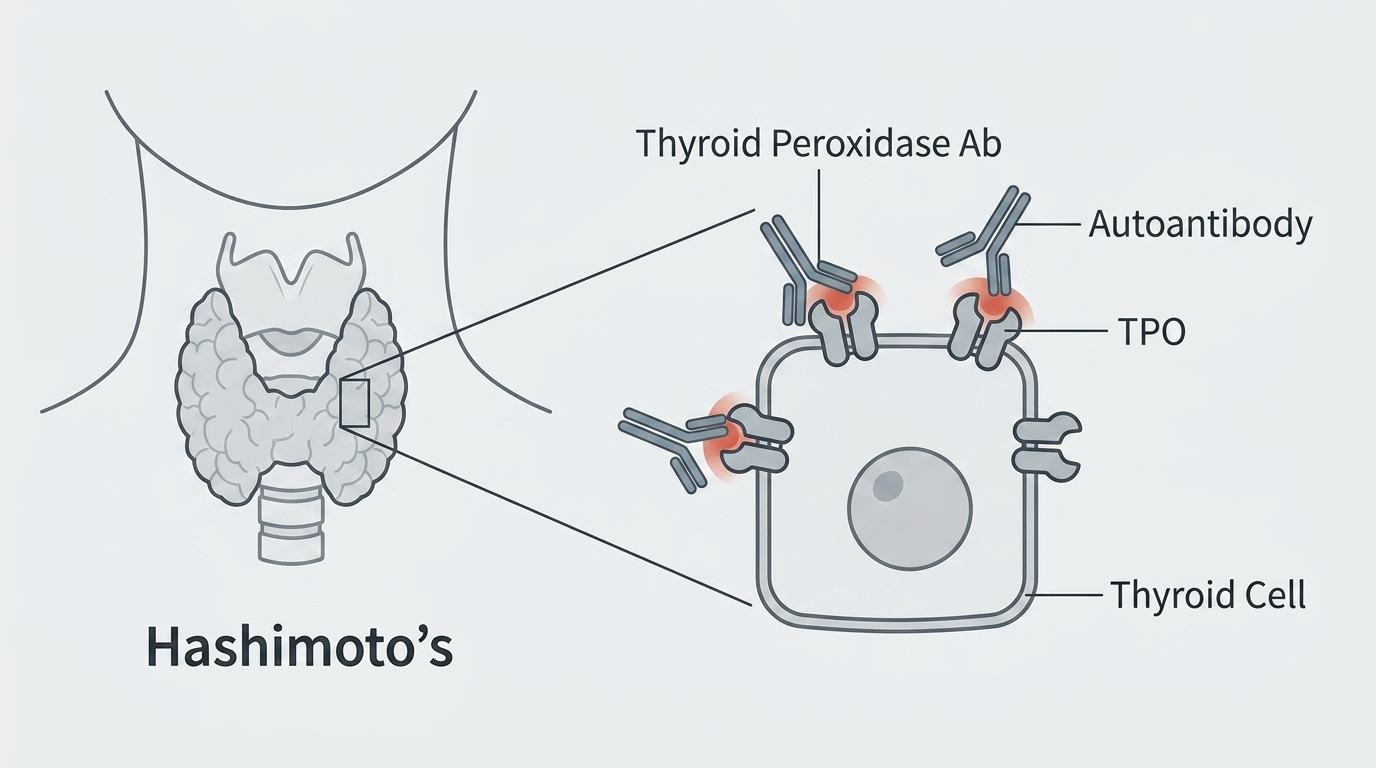
TPO antibodies – thyroid peroxidase antibodies – are the primary diagnostic marker for Hashimoto’s thyroiditis, the most common autoimmune disease in the United States and the leading cause of hypothyroidism in developed countries. Unlike TSH, which tells you whether thyroid function is currently adequate, TPO antibodies tell you whether your immune system is attacking your thyroid gland. This distinction is critical: elevated TPO antibodies can be present for years, even decades, before TSH rises above normal or symptoms become obvious. By the time most people are diagnosed with Hashimoto’s, significant thyroid tissue has already been destroyed. Testing for TPO antibodies identifies the autoimmune process at its earliest detectable stage – when intervention can preserve the most thyroid function and prevent the full burden of hypothyroidism from developing.
What Is TPO Ab (Thyroid Peroxidase Antibody)?
Thyroid peroxidase (TPO) is an enzyme located on the apical surface of thyroid follicular cells that plays an essential role in thyroid hormone synthesis. TPO catalyzes the iodination of tyrosine residues in thyroglobulin (the precursor protein) and the coupling of iodinated tyrosines to form T4 and T3. In other words, TPO is one of the key enzymes that makes thyroid hormone production possible.
In Hashimoto’s thyroiditis, the immune system mistakenly identifies TPO as a foreign antigen and produces antibodies directed against it. These TPO antibodies (also called anti-thyroid peroxidase antibodies, anti-TPO, or TPOAb) bind to TPO on thyroid cells and, together with cytotoxic T-lymphocytes and complement activation, drive progressive destruction of thyroid follicular cells. The result is a chronic, typically slowly progressive inflammatory process that gradually replaces functional thyroid tissue with fibrotic tissue – reducing the thyroid’s capacity to produce adequate hormone and eventually leading to hypothyroidism in the majority of affected individuals.
Why TPO Antibodies Matter for Long-Term Thyroid Health
The clinical importance of TPO antibodies extends well beyond diagnosis. For individuals with elevated TPO antibodies and currently normal TSH (a condition called euthyroid Hashimoto’s or subclinical Hashimoto’s), longitudinal data shows a 4-5% annual risk of progressing to overt hypothyroidism requiring thyroid hormone replacement. This progression is not inevitable – it is influenced by selenium intake, iodine intake, lifestyle factors, other autoimmune activity, and possibly interventions targeting the underlying immune dysfunction.
For people already on levothyroxine (thyroid hormone replacement) for hypothyroidism, knowing whether Hashimoto’s is the underlying cause matters for management – Hashimoto’s patients often have more variable thyroid function over time, a higher rate of T3 metabolism issues, and more complex symptoms than people with other forms of hypothyroidism. Additionally, Hashimoto’s is associated with significantly higher rates of other autoimmune conditions – Type 1 diabetes, celiac disease, rheumatoid arthritis, lupus, vitiligo, and others – making it a systemic immune dysregulation signal, not just a thyroid problem.
Normal vs. Optimal TPO Antibody Levels
Standard Reference Ranges: Most laboratories report TPO antibodies as normal at less than 9 IU/mL or less than 34 IU/mL (reference ranges vary by laboratory and assay). Values above the upper limit of normal are considered positive for thyroid autoimmunity. Values above 500-1000 IU/mL reflect high-titer autoimmunity with aggressive ongoing immune attack. Some people have borderline values (slightly above the upper limit of normal) that may represent early or mild immune activity and warrant serial monitoring.
The Problem With “Normal”: A negative TPO antibody test does not completely rule out Hashimoto’s – approximately 5-10% of Hashimoto’s cases are seronegative (antibody-negative but positive on thyroid ultrasound, which shows the characteristic heterogeneous, coarsened thyroid texture of autoimmune inflammation). More importantly, a positive TPO antibody with currently normal TSH is often dismissed as “not a problem yet” – when in reality it is the earliest detectable phase of an ongoing autoimmune process that will, for many individuals, eventually impair thyroid function. Early identification enables early intervention.
Optimal TPO Antibody Level: From a health optimization standpoint, undetectable or very low TPO antibodies alongside normal TSH, free T4, and free T3 represents optimal thyroid immune health. For those with confirmed positive TPO antibodies, the goal shifts to slowing or halting the autoimmune process, monitoring thyroid function closely, and optimizing the nutritional and lifestyle factors that influence Hashimoto’s activity.
What Causes Elevated TPO Antibodies?
Hashimoto’s thyroiditis is the primary cause of significantly elevated TPO antibodies. Graves’ disease (autoimmune hyperthyroidism) also produces TPO antibodies, though the dominant antibodies in Graves’ disease are thyroid stimulating immunoglobulins (TSI) rather than TPO antibodies. Postpartum thyroiditis – a transient autoimmune thyroid inflammation that occurs in 5-10% of women after delivery – is characterized by elevated TPO antibodies and is more common in women who had positive TPO antibodies before pregnancy. TPO antibodies are found in approximately 10-15% of the general population, more commonly in women (female-to-male ratio of 7:1 in Hashimoto’s), and increase in prevalence with age. Genetic factors play a major role – first-degree relatives of people with Hashimoto’s have significantly elevated TPO antibody rates even in the absence of thyroid disease.
Environmental triggers that may precipitate or worsen TPO antibody production in genetically susceptible individuals include excess iodine supplementation (paradoxically, very high iodine can trigger autoimmune thyroiditis), selenium deficiency (selenium-containing enzymes regulate thyroid immune tolerance), celiac disease and gluten sensitivity, other infections (viral infections such as EBV have been proposed as triggers), and significant stress events. Smoking has a complex relationship with thyroid autoimmunity – it appears to mildly protect against Hashimoto’s while increasing risk of Graves’ disease.
Interventions to Support Thyroid Immune Health
While there is no established pharmaceutical treatment specifically for elevated TPO antibodies with normal TSH, several evidence-based and emerging interventions show promise for reducing TPO antibody levels and slowing Hashimoto’s progression. Selenium supplementation (200 mcg daily of selenomethionine) has the strongest evidence base – multiple randomized controlled trials demonstrate significant reduction in TPO antibody levels with selenium supplementation in Hashimoto’s patients. Selenium supports the function of selenoprotein P and glutathione peroxidase enzymes that modulate thyroid immune activity. Vitamin D optimization is associated with lower TPO antibody levels – vitamin D deficiency is highly prevalent in Hashimoto’s patients and vitamin D has immune-modulating effects relevant to autoimmunity. A gluten-free diet reduces TPO antibodies in Hashimoto’s patients who have concurrent celiac disease or non-celiac gluten sensitivity – testing for celiac disease (anti-TTG antibodies) is appropriate in people with Hashimoto’s. Low-dose naltrexone (LDN) is an emerging therapy being studied for Hashimoto’s due to its immune-modulating properties.
Frequently Asked Questions
Can TPO antibodies go away on their own?
TPO antibodies can fluctuate in titer over time. Some people see reductions in antibody levels, particularly with selenium supplementation, vitamin D optimization, gluten elimination (in those with celiac or gluten sensitivity), and treatment of other autoimmune conditions. Thyroid hormone replacement in people with Hashimoto’s hypothyroidism sometimes reduces TPO antibody levels over years, possibly by reducing TSH-driven thyroid stimulation and the associated immune activation. Complete disappearance of TPO antibodies is possible but uncommon in established Hashimoto’s.
I have positive TPO antibodies but my TSH is normal. Do I need treatment?
In conventional medicine, treatment with thyroid hormone medication typically is not initiated until TSH rises above the normal range. However, positive TPO antibodies with normal TSH warrants monitoring – TSH annually, free T4 and T3 alongside it. It also warrants evaluation for selenium adequacy, vitamin D levels, celiac disease, and other autoimmune conditions. Nutritional optimization (selenium, vitamin D) and lifestyle interventions that support immune regulation may slow progression. Some functional medicine physicians consider low-dose thyroid hormone in symptomatic Hashimoto’s patients with high-normal TSH (2.5-4.5 mIU/L) even before it rises above the conventional cutoff, but this approach requires individualized assessment.
Is Hashimoto’s associated with other autoimmune diseases?
Yes, significantly. People with Hashimoto’s have substantially elevated rates of other autoimmune conditions: celiac disease (up to 10 times higher prevalence), Type 1 diabetes, rheumatoid arthritis, lupus, Sjogren’s syndrome, vitiligo, pernicious anemia, and inflammatory bowel disease. The co-occurrence reflects shared genetic susceptibility and immune dysregulation mechanisms. Anyone diagnosed with Hashimoto’s should be screened for celiac disease (anti-TTG IgA antibodies) and for signs of other autoimmune conditions. A diagnosis of any single autoimmune disease should prompt thyroid screening – including TPO antibodies.
How do TPO antibodies affect pregnancy?
TPO antibodies before pregnancy substantially increase the risk of postpartum thyroiditis (5-10x higher risk) and recurrent miscarriage. Women with positive TPO antibodies and currently normal thyroid function who become pregnant require close thyroid monitoring throughout pregnancy – TSH can rise significantly in the first trimester when thyroid hormone demands increase, and women with Hashimoto’s who were previously euthyroid may develop hypothyroidism requiring treatment during pregnancy. All women planning pregnancy ideally should have TPO antibodies and TSH checked preconception to identify those who will need closer monitoring.
Does selenium really lower TPO antibodies?
Multiple randomized controlled trials have shown that selenium supplementation at 200 mcg/day reduces TPO antibody levels in Hashimoto’s patients, with several meta-analyses confirming this effect. The proposed mechanism involves selenium-dependent antioxidant enzymes (particularly glutathione peroxidase and thioredoxin reductase) that reduce oxidative damage in thyroid tissue and modulate immune activity. The effect size is modest – a reduction of approximately 20-40% in TPO antibody levels on average – and selenium does not treat hypothyroidism directly, but it represents one of the strongest nutritional interventions with evidence for slowing Hashimoto’s autoimmune activity.
Testing TPO Antibodies With ApexBlood
ApexBlood’s comprehensive panel includes TPO antibodies alongside TSH, free T4, and free T3 – the complete thyroid assessment needed to detect both functional thyroid status and the underlying autoimmune process. Testing TPO antibodies separately from thyroid function tests misses the full picture. Our physicians can discuss what elevated TPO antibodies mean for your long-term thyroid health, guide appropriate monitoring intervals, and recommend evidence-based interventions for Hashimoto’s management.
Get comprehensive testing for $189
The Bottom Line on TPO Antibodies
TPO antibodies are the earliest detectable marker of Hashimoto’s thyroiditis – the autoimmune attack on your thyroid that precedes hypothyroidism by years to decades. Elevated TPO antibodies with currently normal TSH is not “not a problem yet” – it is the identification of an active autoimmune process that warrants monitoring, nutritional optimization (selenium, vitamin D), screening for related autoimmune conditions, and lifestyle strategies to support immune regulation. The window for meaningful intervention is widest at this early stage. Waiting until TSH rises to initiate any response means accepting preventable thyroid damage. Stop accepting “normal” when optimal is possible.
Medical Disclaimer: This information is for educational purposes and does not constitute medical advice. TPO antibodies and thyroid autoimmunity require evaluation by qualified healthcare providers. Never self-treat based on antibody levels alone. Always consult licensed medical professionals for diagnosis and treatment decisions.