
Your doctor checks your ferritin, sees it fall somewhere in the “normal” range, and moves on. But that range – typically 12 to 300 ng/mL for men and 12 to 150 ng/mL for women – is so broad it is almost meaningless for anyone serious about performance. Ferritin at 15 ng/mL and ferritin at 150 ng/mL are both “normal.” They produce completely different physiological realities, and only one of them supports peak energy, athletic performance, and cognitive function.
What Is Ferritin?
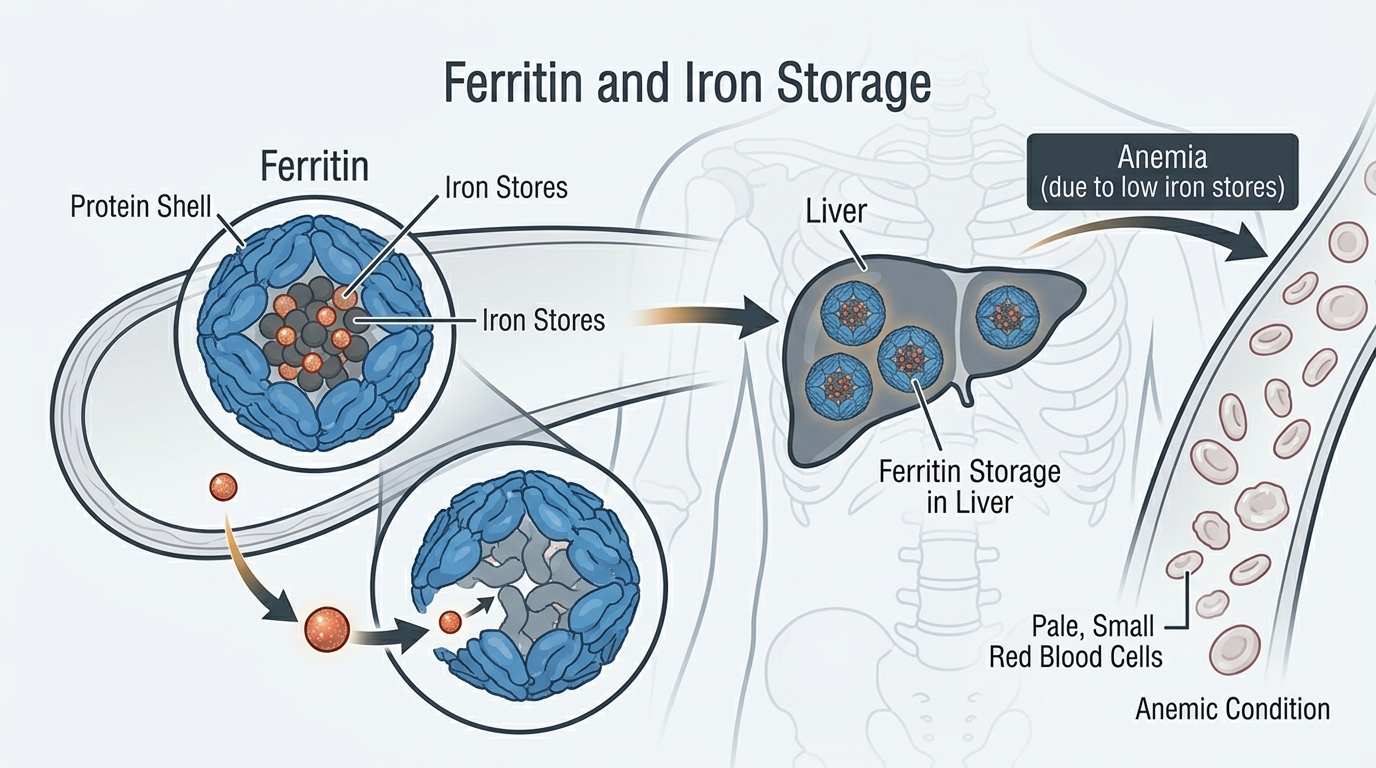
Ferritin is the primary iron storage protein in your body. Every cell that stores iron wraps it inside ferritin – a hollow protein shell that can hold up to 4,500 iron atoms in a stable, non-toxic form. When your body needs iron for immediate use, it releases it from ferritin into circulation. When you have excess iron, ferritin captures it to prevent oxidative damage to tissues.
The ferritin level measured in your blood represents a small fraction of your body’s total ferritin – most is stored inside cells, particularly in the liver, spleen, and bone marrow. But serum ferritin correlates well with total body iron stores, making it the primary clinical test for assessing iron status. Low serum ferritin signals depleted iron stores before clinical anemia ever appears. High serum ferritin can indicate iron overload, but it is also a significant marker of inflammation and metabolic dysfunction – a distinction that matters enormously for proper treatment.
Why Ferritin Matters for Performance and Longevity
Iron, stored and regulated by ferritin, is the central mineral for oxygen transport and energy production. Hemoglobin – the protein that carries oxygen in red blood cells – requires iron. Without adequate iron stores, your body struggles to maintain optimal hemoglobin levels, and oxygen delivery to working muscles and the brain deteriorates. The consequences show up as fatigue, poor endurance, impaired recovery, and brain fog long before you develop frank anemia that a standard blood count will catch.
Iron availability also directly affects mitochondrial function – the cellular machinery that produces ATP for everything from muscle contractions to cognitive processing. Athletes with depleted ferritin consistently underperform compared to iron-sufficient counterparts, even when hemoglobin appears normal. For high performers, ferritin optimization is foundational. It is one of the most impactful and commonly overlooked levers in performance biology.
Normal vs. Optimal Ferritin Levels
Standard Reference Ranges: Most labs report ferritin as normal between 12 and 300 ng/mL for men, and 12 to 150 ng/mL for women. These ranges were designed primarily to identify clinical iron deficiency anemia – not suboptimal iron status that impairs performance without causing outright disease.
The Problem With “Normal”: Ferritin at 15 ng/mL is technically “normal” by lab standards. But research consistently shows that people with ferritin below 30-50 ng/mL frequently experience fatigue, impaired exercise capacity, poor concentration, hair loss, restless leg syndrome, and reduced immune function – even when hemoglobin is perfectly fine. The conventional range was set to catch iron deficiency anemia, not to optimize human performance. For that purpose, it fails almost completely.
Optimal Range for Performance and Longevity: For most adults prioritizing performance, optimal ferritin falls between 50 and 150 ng/mL. In this range, iron stores are sufficient to support robust hemoglobin production, mitochondrial function, and immune response without the risks associated with iron overload. Athletes and highly active individuals may benefit from the higher end (75-150 ng/mL) to support the elevated iron demands of regular intense training. Ferritin consistently above 200 ng/mL warrants investigation for underlying inflammation or iron overload disorders – high ferritin is not always good ferritin.
Symptoms of Low Ferritin
Iron deficiency is the world’s most common nutritional deficiency. Most people experience iron depletion long before hemoglobin drops enough to be flagged as anemia. Symptoms of low ferritin include persistent fatigue that does not resolve with rest, reduced exercise tolerance and poor athletic performance, difficulty concentrating and brain fog, hair thinning and hair loss (ferritin below 30 ng/mL is strongly associated with telogen effluvium), brittle nails, restless leg syndrome especially at night, frequent infections from impaired immune function, headaches, and cold intolerance. If you experience any combination of these and your doctor says your “iron is fine” because hemoglobin is normal, push specifically for a ferritin measurement.
Risks of High Ferritin
Elevated ferritin is more complicated than simple iron overload. While it can indicate excess iron, high ferritin is also a major marker of inflammation – the body produces more ferritin in response to inflammatory signals as part of the acute phase response. So ferritin above 300-500 ng/mL might mean iron overload (as in hereditary hemochromatosis), but it might also mean chronic inflammation, metabolic syndrome, liver disease, or infection. True iron overload is dangerous: excess iron accumulates in organs – the liver, heart, pancreas, and joints – causing progressive damage including liver disease, diabetes, joint pain, and cardiac dysfunction.
What Causes Low Ferritin?
Inadequate dietary iron intake is the most common cause, particularly in populations consuming little red meat or highly plant-based diets where iron bioavailability is low. Blood loss is a major driver – heavy menstrual periods are the leading cause in premenopausal women, and gastrointestinal bleeding from ulcers, polyps, or colon cancer depletes iron stores in men and postmenopausal women. Malabsorption conditions including celiac disease, inflammatory bowel disease, and H. pylori infection prevent adequate iron uptake even with sufficient dietary intake. High-endurance athletes face elevated depletion risk from sweat losses, footstrike hemolysis, GI blood losses during intense training, and the high iron demands of increased red blood cell turnover. Pregnancy dramatically increases iron requirements and commonly depletes ferritin stores.
What Causes High Ferritin?
Hereditary hemochromatosis – a genetic disorder causing excessive iron absorption – is the most common cause of true iron overload, with ferritin progressively rising over decades if untreated. Liver disease, repeated blood transfusions, alcohol overuse, metabolic syndrome, obesity, type 2 diabetes, and autoimmune conditions can all elevate ferritin. Importantly, chronic inflammation from any source elevates ferritin as an acute phase reactant – so high ferritin may reflect systemic inflammation rather than iron overload. Distinguishing between these causes requires looking at transferrin saturation alongside ferritin. Iron supplementation without monitoring is another common cause of inappropriately elevated ferritin.
How to Optimize Ferritin Levels
For low ferritin, dietary optimization is the first step: emphasize heme iron sources – red meat, organ meats, shellfish – which absorb at 15-35% compared to 2-10% for plant-based non-heme iron. Pair iron-rich foods with vitamin C to enhance non-heme iron absorption. Avoid consuming calcium-rich foods, coffee, tea, or high-phytate foods alongside iron-rich meals, as these inhibit absorption. Iron supplementation is often necessary when ferritin is significantly depleted. Ferrous bisglycinate is gentler on the digestive system than ferrous sulfate while maintaining good absorption. Monitor ferritin every 8-12 weeks during supplementation to track progress and avoid overshooting into iron excess. Identifying and treating the underlying cause of iron loss is essential – supplements address the deficiency but not the root cause.
For elevated ferritin, the approach depends on the cause. Suspected hemochromatosis warrants genetic testing and therapeutic phlebotomy (regular blood removal). If inflammation is driving ferritin elevation, addressing the underlying inflammatory trigger through dietary changes, treatment of chronic conditions, or metabolic health improvement is the priority. Reducing alcohol intake matters significantly for liver-related ferritin elevation. Improving metabolic health and reducing visceral fat can substantially lower inflammation-driven ferritin in people with metabolic syndrome. Physician-supervised weight loss often produces meaningful ferritin normalization as a secondary benefit when metabolic dysfunction is the root driver.
Frequently Asked Questions
What ferritin level is optimal for performance?
For most adults focused on performance, ferritin between 50 and 150 ng/mL represents optimal iron stores. The standard “normal” range (12-300 ng/mL) is too broad to be meaningful for optimization. Ferritin below 30 ng/mL frequently causes symptoms even when hemoglobin is normal, and ferritin above 200 ng/mL warrants investigation for inflammation or iron overload.
Can you have low ferritin but normal hemoglobin?
Yes – this is iron deficiency without anemia, and it is extremely common. Ferritin depletes before hemoglobin falls because the body prioritizes maintaining hemoglobin for oxygen transport. You can have ferritin at 10-20 ng/mL with completely normal hemoglobin while experiencing significant fatigue, hair loss, poor exercise capacity, and brain fog. This stage of iron depletion responds well to iron repletion and is clinically significant even without anemia on a standard blood count.
How long does it take ferritin to improve with supplementation?
Ferritin begins rising within 2-4 weeks of consistent iron supplementation, but reaching optimal levels takes longer. If severely depleted (ferritin below 20 ng/mL), expect 3-6 months of supplementation to reach optimal levels. Monitoring every 8-12 weeks allows dose adjustment and prevents overshoot into excess. The rate of recovery also depends on whether the underlying cause of depletion has been addressed – supplementing without fixing the root cause produces temporary improvement at best.
Does high ferritin always mean too much iron?
No. Ferritin is an acute phase reactant that rises with inflammation, so high ferritin frequently reflects chronic inflammation rather than true iron overload. To distinguish between these, check transferrin saturation alongside ferritin. Iron overload typically shows both high ferritin AND high transferrin saturation (above 45%). Inflammation alone typically elevates ferritin without dramatically raising transferrin saturation. Always interpret ferritin in context with your full iron panel.
Should athletes aim for higher ferritin?
Yes. Endurance athletes have elevated iron requirements from sweat losses, footstrike hemolysis, minor GI blood losses during intense training, and the higher iron demands of increased red blood cell turnover. Many sports medicine physicians recommend athletes maintain ferritin in the 75-150 ng/mL range rather than the 50-150 ng/mL threshold suggested for less active individuals. Regular ferritin monitoring is particularly valuable for endurance athletes.
What foods are highest in iron?
Heme iron from animal sources is most bioavailable: beef liver is the iron-density champion at roughly 5-6 mg per 3 oz serving with 15-35% absorption. Oysters, clams, red meat, and dark poultry meat are other excellent sources. Plant-based non-heme iron in lentils, spinach, tofu, and fortified cereals has much lower absorption (2-10%) but can be improved significantly by consuming these foods with vitamin C and avoiding calcium, tea, and coffee at the same meal.
Testing Ferritin With ApexBlood
Ferritin is included in ApexBlood’s comprehensive blood panel alongside serum iron, TIBC, transferrin saturation, and complete blood count – giving you the full iron status picture rather than a single number in isolation. Understanding ferritin in context with your complete iron panel, inflammatory markers, and metabolic indicators allows for accurate interpretation and targeted action. If your ferritin is outside optimal range, our physicians can discuss specific interventions based on your complete picture.
You cannot optimize what you do not measure. Stop accepting “your iron looks fine” when optimal ferritin could be the performance edge you have been missing.
Get comprehensive testing for $189
The Bottom Line on Ferritin
Ferritin is your body’s iron storage gauge, and the “normal” range your lab reports tells you almost nothing about whether your iron status is actually supporting peak performance. Ferritin at 15 ng/mL and 150 ng/mL are both “normal” – but they produce dramatically different energy levels, exercise capacity, cognitive function, and recovery quality. Stop accepting “your iron is fine” when your ferritin is not optimized.
Test your ferritin in context with your complete iron panel, understand where your levels fall relative to optimal – not average – and address the root cause driving any imbalance. High performers do not make health decisions based on whether they clear a population-average threshold. Stop accepting “normal” when optimal is possible.
Medical Disclaimer: This information is for educational purposes and does not constitute medical advice. Ferritin and iron status require evaluation by qualified healthcare providers. Never make treatment decisions based solely on internet information. Always consult licensed medical professionals for diagnosis and treatment.