
Glucose is the single most important fuel source in the human body — every cell, organ, and neurological process runs on it. Yet despite being the most tested biomarker in medicine, glucose is chronically misunderstood. Your doctor checks it once a year and tells you you’re “normal.” Meanwhile, your energy is crashing at 2pm, your focus is inconsistent, your body composition is stubbornly refusing to change, and your long-term disease risk is quietly climbing.
The problem isn’t just high glucose — it’s glucose dysregulation. Blood sugar that spikes and crashes throughout the day is just as damaging as chronically elevated levels, and a single fasting glucose test catches neither. Understanding your glucose means understanding the full picture: fasting levels, post-meal response, insulin sensitivity, and long-term glycemic control. This is where optimization starts.
What Is Glucose?
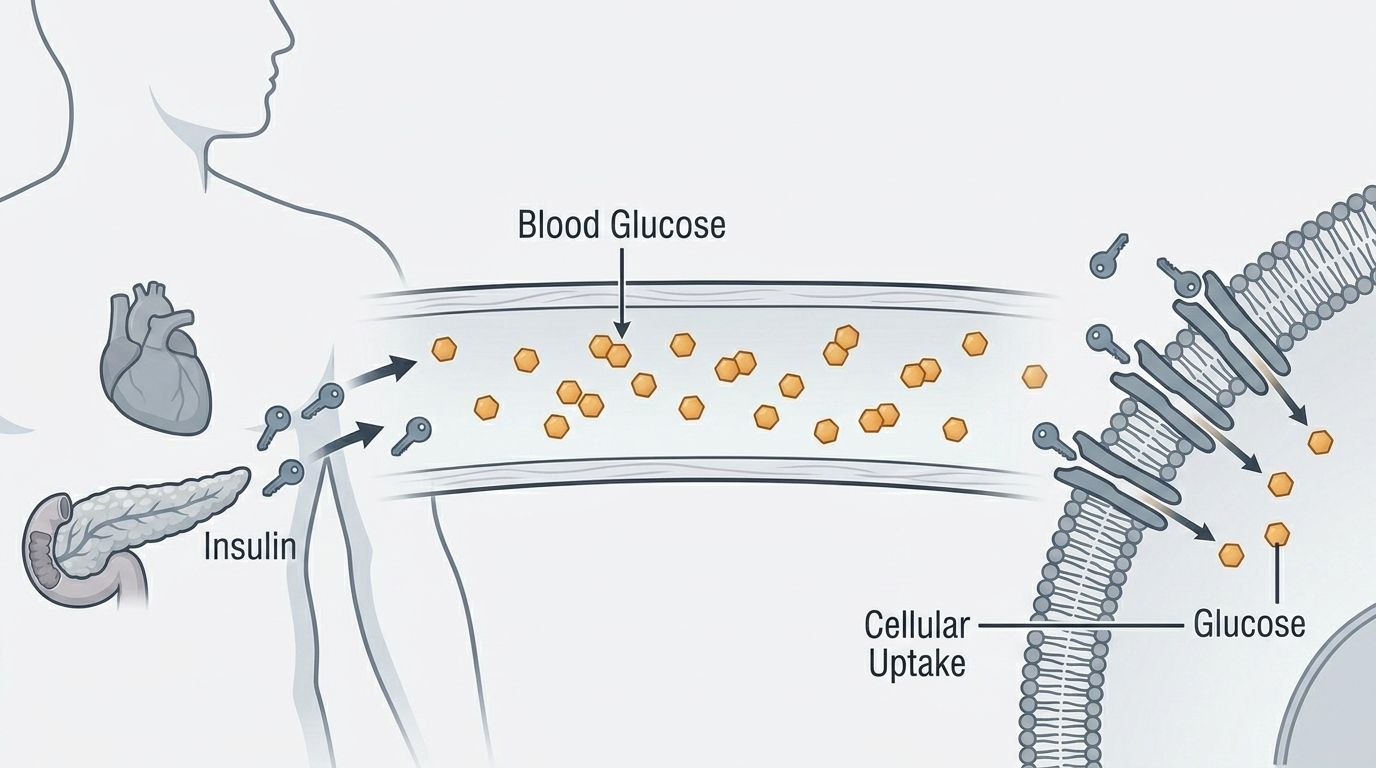
Glucose is a simple sugar — a monosaccharide — that serves as the primary energy currency of the body. When you eat carbohydrates, your digestive system breaks them down into glucose, which then enters the bloodstream. From there, the pancreas releases insulin to shuttle glucose into cells, where it’s burned for energy, stored as glycogen in the liver and muscles, or converted to fat when in excess.
Blood glucose is measured in milligrams per deciliter (mg/dL) and reflects the amount of sugar circulating in your bloodstream at any given moment. A standard glucose test measures fasting blood glucose — taken after at least 8 hours without food — which gives a baseline snapshot of how your body manages blood sugar in the absence of dietary input.
Glucose regulation is a highly orchestrated process involving the pancreas (which produces insulin and glucagon), the liver (which stores and releases glucose), skeletal muscle (the largest glucose sink in the body), fat tissue, and the brain (which requires a constant glucose supply and accounts for roughly 20% of total glucose consumption).
Why Glucose Matters for Performance and Longevity
Glucose dysregulation is the upstream cause of some of the most devastating chronic diseases — type 2 diabetes, cardiovascular disease, non-alcoholic fatty liver disease, and Alzheimer’s disease (increasingly called “type 3 diabetes”). But long before any of these diagnoses appear, dysregulated glucose is quietly destroying your day-to-day performance. Energy crashes, brain fog, poor sleep, increased hunger, difficulty losing body fat, and accelerated cellular aging all trace back to blood sugar instability.
High glucose damages blood vessels through glycation — glucose molecules bind to proteins and fats, forming advanced glycation end-products (AGEs) that stiffen arteries, damage nerves, and accelerate biological aging. This process begins well below the diabetic threshold, which is exactly why “normal” glucose is not the same as “optimal” glucose.
Normal vs. Optimal Glucose Levels
Standard clinical reference ranges for fasting glucose: Normal is below 100 mg/dL, Prediabetes is 100–125 mg/dL, and Diabetes is 126 mg/dL or above on two separate tests. These ranges were designed to identify disease, not optimize health.
Research consistently shows that fasting glucose above 90 mg/dL is associated with increased cardiovascular risk and insulin resistance — even in people considered clinically “normal.” The performance-optimized fasting glucose range is 72–90 mg/dL. Below 70 mg/dL may indicate hypoglycemia or adrenal stress. Above 90 mg/dL warrants investigation of insulin sensitivity, dietary patterns, and lifestyle factors.
Post-meal glucose (measured 1–2 hours after eating) is equally important but rarely tested in standard care. Optimal peak post-meal glucose is below 140 mg/dL, with a return to baseline within 2 hours. Continuous glucose monitoring (CGM) reveals patterns that single-point fasting tests completely miss.
What Causes High Glucose?
Elevated fasting glucose is almost always a sign of insulin resistance — the condition where cells have become less responsive to insulin’s signal to absorb glucose. The primary drivers include excess visceral body fat, a diet high in refined carbohydrates and added sugars, physical inactivity, chronic sleep deprivation (even one night of poor sleep measurably raises insulin resistance), chronic psychological stress (cortisol raises blood glucose directly), and excessive alcohol consumption.
Other causes include type 1 and type 2 diabetes, pancreatitis, certain medications (corticosteroids, some antipsychotics, thiazide diuretics), hormonal disorders such as Cushing’s syndrome, and acute illness or injury. The stress response during recovery from illness or surgery can raise glucose substantially even in otherwise healthy individuals.
What Causes Low Glucose?
Low fasting glucose (below 70 mg/dL) is less common but worth investigating. Reactive hypoglycemia — where glucose drops significantly after meals — is common in people with insulin resistance whose pancreas overproduces insulin in response to carbohydrate intake. Other causes include insulin-producing tumors (insulinomas), excessive insulin from diabetes medication, prolonged fasting, heavy alcohol consumption (which impairs liver glucose release), and adrenal insufficiency.
How to Optimize Your Glucose Levels
Exercise is the most powerful glucose-lowering intervention available. Muscle contraction drives glucose uptake independently of insulin — even a 10-minute walk after a meal reduces the post-meal glucose spike by 20–30%. Both resistance training (which increases muscle mass, your primary glucose sink) and cardiovascular exercise dramatically improve insulin sensitivity with consistent practice.
Diet composition matters more than calorie counting for glucose control. Reducing refined carbohydrates and added sugars is the most direct intervention. Increasing dietary fiber (which slows glucose absorption), prioritizing protein and healthy fats, and pairing carbohydrates with protein or fat to blunt spikes all produce meaningful improvements. Sleep quality — 7–9 hours nightly — is non-negotiable for metabolic health. Stress management is critical, as chronic cortisol elevation directly raises glucose regardless of diet quality.
Medical Support for Glucose Optimization
When lifestyle optimization isn’t sufficient, medical interventions can provide meaningful support. Metformin is the most evidence-backed pharmaceutical for insulin resistance and elevated glucose — it improves insulin sensitivity, reduces hepatic glucose production, and has shown potential longevity benefits in research. GLP-1 medications like semaglutide and tirzepatide produce dramatic improvements in glucose regulation alongside substantial weight loss, addressing metabolic dysfunction at its root.
Understanding your glucose in context with insulin, HbA1c, and a full metabolic panel is the foundation of any optimization protocol. Comprehensive blood testing provides the data to make decisions based on your actual biology. If glucose dysregulation reveals hormonal imbalances contributing to metabolic issues, hormone optimization may also play a supporting role.
Frequently Asked Questions About Glucose
What is a normal fasting glucose level?
Clinically, below 100 mg/dL is considered normal. For performance and longevity optimization, the ideal fasting glucose range is 72–90 mg/dL. Levels above 90 mg/dL — even within the “normal” clinical range — are associated with increased cardiovascular risk and insulin resistance in research populations.
Can you have high glucose without diabetes?
Absolutely. Prediabetes affects an estimated 98 million Americans — one in three adults — most undiagnosed. Insulin resistance can drive glucose dysfunction for years before meeting the clinical threshold for diabetes. Catching dysregulation early, when lifestyle intervention is most effective, is far better than waiting for a diabetes diagnosis.
How quickly can you lower fasting glucose?
Glucose responds rapidly to lifestyle changes. Dietary improvements and increased exercise can lower fasting glucose meaningfully within 1–4 weeks. Significant weight loss, particularly visceral fat reduction, can normalize glucose in people with prediabetes within 3–6 months. Medical interventions like metformin or GLP-1 medications act more quickly but work best alongside lifestyle optimization.
Should I fast before a glucose test?
Yes — standard fasting glucose tests require at least 8 hours without food or caloric beverages (water is fine). Testing without fasting produces a postprandial glucose reading, which reflects a different metabolic state. For the most accurate baseline, test in the morning before breakfast after an overnight fast.
What’s the connection between glucose and HbA1c?
HbA1c reflects your average blood glucose over the past 2–3 months by measuring how much glucose has bonded to hemoglobin. While fasting glucose is a snapshot, HbA1c provides a longer-term view. Both markers together tell the complete story. A fasting glucose in range with an elevated HbA1c suggests post-meal spikes that fasting testing misses entirely.
Can stress raise blood glucose?
Yes, significantly. Cortisol and adrenaline directly raise blood glucose as part of the stress response, mobilizing energy for immediate use. Chronic psychological stress manifests as chronically elevated fasting glucose that resists dietary changes alone. Stress management is a non-negotiable component of glucose optimization.
What is insulin resistance and how does it relate to glucose?
Insulin resistance is when cells become less responsive to insulin’s signal to absorb glucose. The pancreas compensates by producing more insulin, which keeps glucose normal initially — but insulin resistance shows up in fasting insulin levels long before glucose rises. Testing insulin alongside glucose is essential for early detection of metabolic dysfunction.
Is glucose tested in ApexBlood’s standard panel?
Yes. Glucose is included in ApexBlood’s comprehensive blood panel alongside HbA1c, insulin, and a full metabolic workup. Testing glucose alone gives a snapshot; testing it alongside insulin and HbA1c gives the complete metabolic picture needed to optimize effectively.
Test your glucose alongside 100+ other biomarkers with ApexBlood for $189. See what we test →
The Bottom Line on Glucose
Glucose is the master biomarker for metabolic health, energy regulation, and long-term disease prevention. A single annual fasting glucose test is inadequate for understanding your metabolic status — you need glucose in context with insulin, HbA1c, and a comprehensive metabolic panel. Optimal glucose isn’t “below 100” — it’s consistently 72–90 mg/dL with minimal post-meal spikes and good insulin sensitivity. The tools exist to optimize this. What most people are missing is the data to know where they actually stand.
Medical Disclaimer: This information is for educational purposes only and does not constitute medical advice. Glucose levels and metabolic health require evaluation by qualified healthcare providers. Always consult licensed medical professionals for diagnosis and treatment.