
Hemoglobin A1c — commonly written HbA1c or just A1c — is one of the most valuable metabolic biomarkers available. While a fasting glucose test tells you where your blood sugar is right now, HbA1c tells you where it’s been for the past two to three months. This distinction is critical: you can fast for 12 hours, stress yourself into a perfect glucose reading, and still have an HbA1c that reveals chronic blood sugar dysregulation hiding behind that single good test result.
HbA1c is the long game biomarker. It exposes the patterns your glucose hides — the post-meal spikes, the overnight elevations, the chronic low-grade metabolic dysfunction that fasting glucose misses entirely. For anyone serious about metabolic health, energy optimization, aging well, or disease prevention, HbA1c is non-negotiable data.
What Is Hemoglobin A1c (HbA1c)?
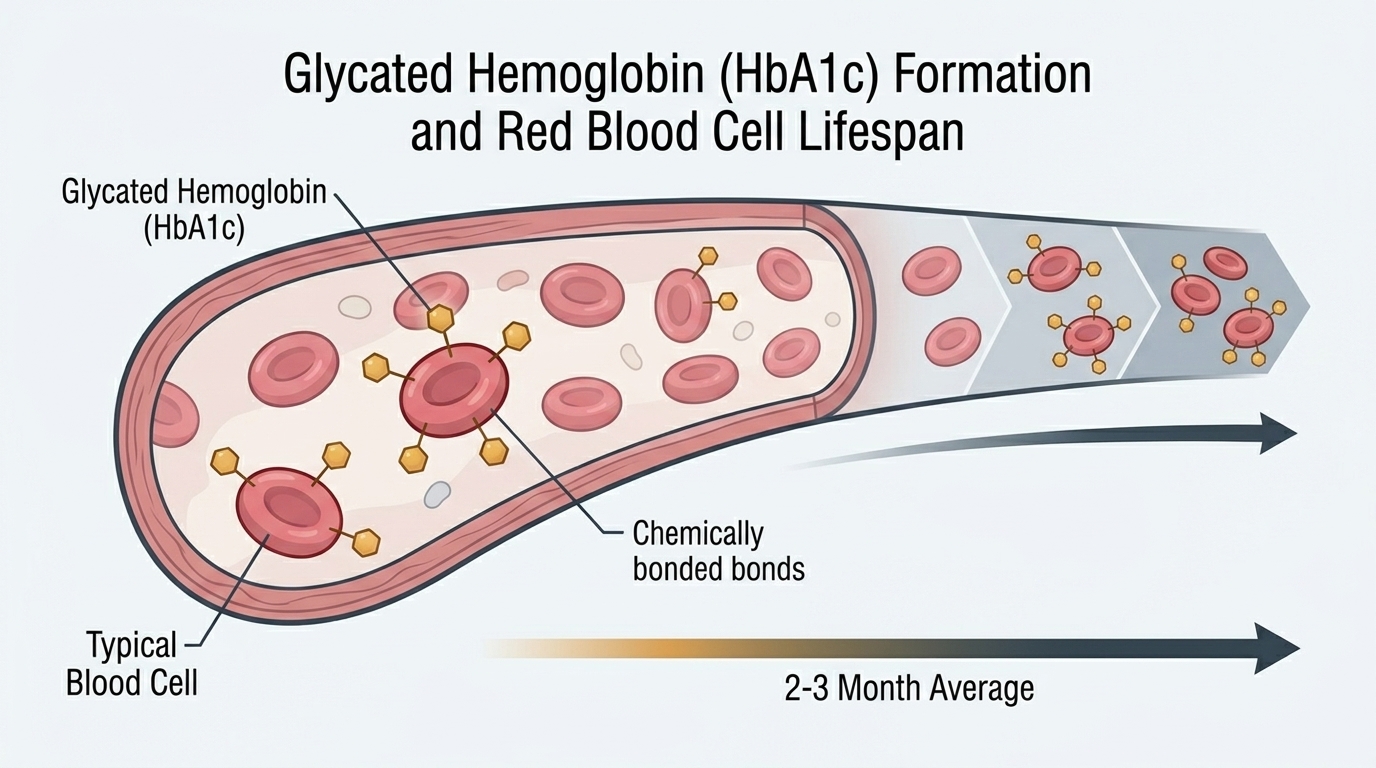
HbA1c measures the percentage of hemoglobin — the protein in red blood cells that carries oxygen — that has glucose molecules permanently attached to it. This attachment process is called glycation and happens continuously throughout the lifespan of a red blood cell, which is approximately 90–120 days. The more glucose present in your bloodstream over that period, the more glycated hemoglobin forms.
Because glycation is irreversible and accumulates over the life of each red blood cell, HbA1c essentially functions as an integrated average of blood glucose over the prior 2–3 months. It’s weighted slightly toward more recent weeks (since newer red blood cells are more abundant), but broadly reflects your metabolic state over that entire window.
The result is expressed as a percentage — the proportion of total hemoglobin that is glycated. An HbA1c of 5.0% means 5% of your hemoglobin molecules have glucose attached; 7.0% means 7% are glycated, corresponding to a much higher average blood glucose and significantly elevated disease risk.
Why HbA1c Matters for Performance and Longevity
Chronically elevated blood glucose — reflected in a high HbA1c — causes damage through a process called glycation: glucose binds to proteins and fats throughout the body, creating advanced glycation end-products (AGEs). These AGEs stiffen blood vessel walls, increase inflammation, impair cellular function, damage nerves, accelerate skin aging, and are associated with virtually every major age-related disease including cardiovascular disease, kidney disease, dementia, and cancer.
Even HbA1c levels in the “normal” range above 5.5% are associated with significantly increased risk. Research from the Framingham Heart Study and other large cohorts shows that cardiovascular risk increases linearly as HbA1c rises — well before reaching the prediabetic or diabetic threshold. For high performers, an elevated HbA1c also correlates with impaired cognitive function, reduced energy levels, worse sleep quality, and impaired recovery from exercise.
Normal vs. Optimal HbA1c Levels
Standard clinical reference ranges define HbA1c as: Normal below 5.7%, Prediabetes 5.7–6.4%, and Diabetes 6.5% and above. These thresholds were established to identify clinical disease, not to define metabolic optimality.
For longevity and performance optimization, the targets are more precise. Optimal HbA1c is below 5.3%, ideally in the 4.8–5.2% range for people without hypoglycemia risk. HbA1c in the 5.3–5.6% range suggests early metabolic stress worth addressing through lifestyle. Above 5.7% (prediabetic range) requires active intervention. Above 6.5% indicates established diabetes requiring medical management.
It’s worth noting that HbA1c can be skewed by conditions affecting red blood cell turnover — iron deficiency anemia, B12 deficiency, hemolytic anemia, and certain hemoglobin variants can all cause HbA1c to read falsely low or high. This is another reason comprehensive testing matters: HbA1c in context with a full blood panel reveals whether the number is accurate.
What Causes Elevated HbA1c?
Elevated HbA1c reflects chronically elevated blood glucose over the preceding months. The root causes are the same as those driving high fasting glucose: insulin resistance from excess visceral fat, poor diet high in refined carbohydrates and sugars, physical inactivity, chronic sleep deprivation, chronic stress and elevated cortisol, and sedentary lifestyle patterns that impair insulin sensitivity over time.
Prediabetes and type 2 diabetes are the primary medical causes. Secondary causes include Cushing’s syndrome, certain medications (particularly corticosteroids), and chronic kidney disease. Interestingly, iron deficiency anemia can cause falsely elevated HbA1c because red blood cell lifespan is shortened, concentrating glycation in newer cells — another reason to test iron status alongside HbA1c.
What Causes Low HbA1c?
HbA1c below 4.5% can indicate hemolytic anemia, blood loss, or other conditions that accelerate red blood cell turnover, creating more “fresh” (less glycated) red blood cells and falsely lowering the reading. Certain hemoglobin variants (sickle cell trait, for example) also affect the test’s accuracy. Very low HbA1c in someone on insulin therapy may suggest hypoglycemia risk. True metabolic health with consistently excellent glucose control can produce HbA1c as low as 4.5–5.0% — this is ideal, not problematic, in a healthy individual.
How to Optimize Your HbA1c
Because HbA1c reflects average glucose over 2–3 months, improvements take time to register — but they are reliably achievable with the right interventions. The most effective strategies address insulin sensitivity at its root.
Exercise is the single most powerful intervention for improving HbA1c. Both resistance training and cardiovascular exercise independently improve insulin sensitivity, and their combination is additive. Even 150 minutes per week of moderate-intensity exercise (a 30-minute walk five days per week) produces clinically meaningful reductions in HbA1c in people with elevated levels. Building muscle mass through resistance training creates more glucose storage capacity, directly reducing average blood glucose.
Dietary carbohydrate management is the most direct dietary lever. Reducing refined carbohydrates and added sugars reduces post-meal glucose spikes — the primary driver of elevated HbA1c in many people. Increasing dietary fiber, protein, and healthy fats blunts glucose response and reduces average blood glucose. Time-restricted eating has also shown meaningful HbA1c reductions in clinical studies.
Sleep and stress management are underappreciated. Poor sleep directly impairs insulin sensitivity and raises glucose. Chronic stress elevates cortisol, which raises glucose as a counterregulatory response. Addressing these factors is essential — dietary changes alone cannot overcome the metabolic impact of chronic sleep deprivation and stress.
Medical Support for HbA1c Optimization
When lifestyle intervention isn’t sufficient, medical support can dramatically accelerate HbA1c improvement. Metformin improves insulin sensitivity and reduces hepatic glucose production, typically lowering HbA1c by 1–2% in people with prediabetes or type 2 diabetes — and has shown longevity benefits beyond glucose management in research settings.
GLP-1 receptor agonists like semaglutide (Ozempic/Wegovy) and tirzepatide (Mounjaro) produce the largest HbA1c reductions of any non-insulin therapy, often bringing prediabetic or diabetic levels into optimal range while simultaneously producing significant weight loss. These medications work by improving insulin secretion, reducing glucagon (which raises blood glucose), slowing gastric emptying, and reducing appetite — a comprehensive metabolic approach. Testing your HbA1c gives you the baseline data to determine which intervention makes sense for your situation.
Frequently Asked Questions About HbA1c
What is a good HbA1c level?
For longevity and performance optimization, below 5.3% is ideal, with 4.8–5.2% representing excellent metabolic control. Clinically, below 5.7% is considered normal, but research shows cardiovascular and metabolic risk increases meaningfully above 5.3–5.5%. If you’re in the 5.7–6.4% (prediabetic) range, active intervention is warranted.
How long does it take to lower HbA1c?
Because HbA1c reflects a 2–3 month average, meaningful changes take at least 3 months to appear. Aggressive lifestyle intervention (significant dietary changes, consistent exercise, improved sleep) can lower HbA1c by 0.5–1.5% over 3–6 months. Medical interventions like GLP-1 medications can produce larger reductions more quickly, but lifestyle changes must accompany them for sustained results.
Can HbA1c be inaccurate?
Yes. Iron deficiency anemia, B12 deficiency, hemolytic anemia, recent blood transfusion, and certain hemoglobin variants can all produce falsely low or high HbA1c readings. This is one reason comprehensive testing — including iron, B12, and a complete blood count — provides better insight than HbA1c alone.
How is HbA1c different from fasting glucose?
Fasting glucose is a point-in-time measurement reflecting blood sugar at the moment of the test. HbA1c is an average over 2–3 months reflecting overall glycemic exposure. You can have normal fasting glucose with elevated HbA1c (if post-meal spikes are the issue) or normal HbA1c with elevated fasting glucose (less common). Both tests together provide a far more complete picture than either alone.
Do I need to fast for an HbA1c test?
No. Because HbA1c reflects a long-term average rather than current blood glucose, fasting is not required. You can eat normally before an HbA1c test. This makes it a practical and convenient metabolic marker to track regularly.
What’s the relationship between HbA1c and longevity?
Research consistently links higher HbA1c with accelerated biological aging, increased all-cause mortality, and higher risk of cardiovascular disease, dementia, kidney disease, and cancer — even within the “normal” clinical range. Keeping HbA1c in the optimal range (below 5.3%) is one of the most reliable longevity levers available, alongside exercise, sleep, and stress management.
Is HbA1c included in ApexBlood’s blood panel?
Yes. HbA1c is included in ApexBlood’s comprehensive blood panel alongside fasting glucose, insulin, and a full metabolic workup. This combination provides a complete picture of your glycemic control and metabolic health — far more actionable than any single test in isolation.
Get your HbA1c tested alongside 100+ biomarkers for $189. See what we test →
The Bottom Line on Hemoglobin A1c
HbA1c is the metabolic report card that your fasting glucose can’t fake. It reveals the patterns — post-meal spikes, overnight elevations, chronic low-grade dysregulation — that single-point testing misses entirely. The standard clinical cutoffs for “normal” are set too high for genuine health optimization; the target for performance and longevity is below 5.3%, ideally 4.8–5.2%.
If your HbA1c is elevated, the path forward is clear: improve insulin sensitivity through exercise, dietary carbohydrate management, sleep optimization, and stress reduction — with medical support where appropriate. The data from comprehensive testing tells you where you stand; the interventions available today can get you where you need to be.
Medical Disclaimer: This information is for educational purposes only and does not constitute medical advice. HbA1c and metabolic health require evaluation by qualified healthcare providers. Always consult licensed medical professionals for diagnosis and treatment.