
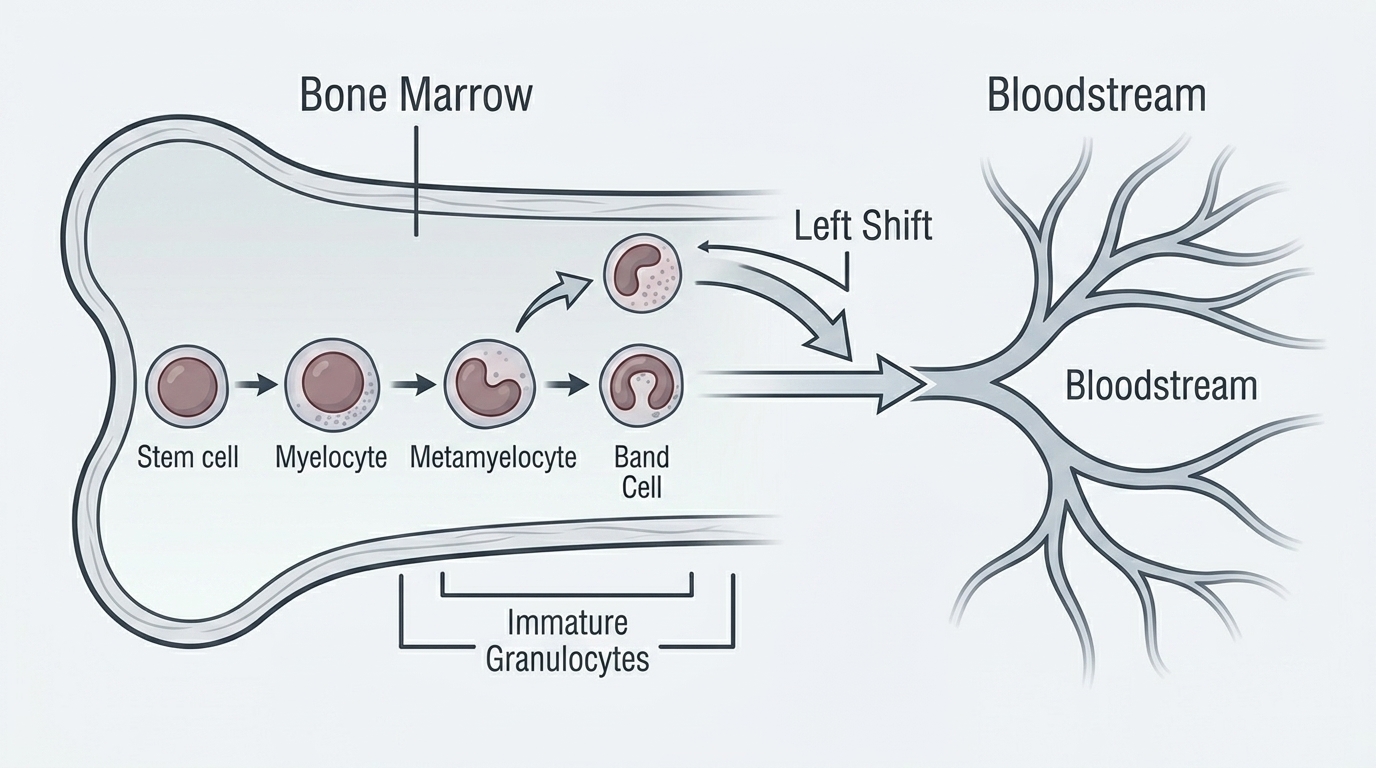
Immature granulocytes on a CBC differential represent white blood cells that have been released from the bone marrow before completing their normal maturation process. Under normal circumstances, your bone marrow produces neutrophils, eosinophils, and basophils (collectively called granulocytes), fully matures them, and releases them into circulation when the body needs them. Immature granulocytes (IGs) are the precursor stages – metamyelocytes, myelocytes, and promyelocytes – that should remain in the marrow until maturation is complete. When they appear in circulation, it signals that the bone marrow is under pressure to produce white blood cells faster than normal, is releasing cells prematurely in response to severe demand, or has a primary disorder affecting normal maturation. Understanding immature granulocytes helps you recognize when your immune system is under significant stress and when further investigation is warranted.
What Are Immature Granulocytes?
Granulocytes (neutrophils, eosinophils, basophils) are produced in the bone marrow through a sequence of maturation stages: myeloblast, promyelocyte, myelocyte, metamyelocyte, band (immature neutrophil), and finally the mature segmented neutrophil that normally circulates in blood. This maturation process takes approximately 10-14 days under normal conditions. In healthy individuals, only mature segmented neutrophils and a small number of band neutrophils are released into circulation. Immature granulocytes – specifically promyelocytes, myelocytes, and metamyelocytes – should remain in the bone marrow until maturation is complete.
Modern automated hematology analyzers can identify immature granulocytes in blood using flow cytometry and light scatter analysis, reporting them as a percentage and absolute count. The presence of immature granulocytes in circulation is called a “left shift” – a term originating from manual blood smear reading, where the maturation sequence was written left-to-right and immature cells appear on the “left” side of the granulocyte maturation line. A left shift indicates accelerated granulocyte production and release in response to physiological demand.
Why Immature Granulocytes Matter for Health Monitoring
Immature granulocytes are a sensitive early biomarker for serious infection and systemic inflammation. When the body encounters severe bacterial infection, sepsis, or major tissue injury, it signals the bone marrow to dramatically accelerate neutrophil production – so rapidly that immature granulocytes are released into circulation before completing their maturation. This left shift is one of the earliest laboratory indicators of sepsis and is often detected before white blood cell counts have risen dramatically or before cultures have confirmed infection.
For health-conscious individuals and those monitoring their health proactively, immature granulocytes on a comprehensive CBC can provide an early warning signal of bacterial infection, severe physiological stress, or bone marrow pathology. A finding of elevated immature granulocytes – particularly in the context of other CBC abnormalities – is one that warrants prompt medical attention rather than watchful waiting, because the conditions that produce it are often serious.
Normal vs. Optimal Immature Granulocyte Levels
Standard Reference Ranges: Most laboratories report immature granulocytes as normal at 0-0.03 x10³/µL (absolute count) or 0-0.4% of total white blood cells. Some labs do not report immature granulocytes at all on routine CBCs unless requested or unless the automated analyzer flags an abnormal pattern. Very small numbers of immature granulocytes may appear in healthy individuals under physiological stress without clinical significance.
The Key Distinction – Context Matters Enormously: A small number of immature granulocytes (0.03-0.1 x10³/µL) in someone who is clinically well, exercising intensely, or recovering from minor illness is very different from the same finding in someone with fever, hypotension, or clinical signs of infection. Immature granulocytes in the context of systemic illness, significantly elevated white blood cell count, or other abnormal CBC findings (thrombocytopenia, anemia) are much more concerning than in isolation in a healthy-appearing individual.
Optimal Level: For healthy adults without infection or inflammation, immature granulocytes should be absent or extremely low (near zero on automated counting). Any consistent presence of immature granulocytes in someone who is otherwise healthy warrants investigation of the bone marrow and a clinical assessment for occult infection, inflammation, or hematologic disorder.
What Causes Elevated Immature Granulocytes?
Severe bacterial infection and sepsis are the most clinically urgent causes of immature granulocyte release. When the body is overwhelmed by bacterial pathogens, the bone marrow deploys every available neutrophil precursor into circulation in an attempt to fight infection – a left shift is one of the hallmarks of serious bacterial infection on CBC. The combination of elevated total white blood cells, elevated immature granulocytes, and band neutrophils alongside clinical signs of infection is a constellation that prompts urgent evaluation and often empiric antibiotic therapy.
Beyond acute infection, immature granulocytes appear with severe physiological stress from any cause: major surgery, trauma, burns, and acute myocardial infarction all trigger bone marrow mobilization of neutrophil precursors. Chronic inflammatory states (rheumatoid arthritis, inflammatory bowel disease, vasculitis) can cause mild persistent left shift. Pregnancy causes a mild left shift in late gestation and especially during labor as a normal physiological response. Myeloproliferative disorders (CML, polycythemia vera, myelofibrosis) cause persistent immature granulocytes in circulation from disordered bone marrow production. Certain medications that stimulate granulocyte production (G-CSF, used to boost white counts during chemotherapy) reliably cause immature granulocyte release.
Frequently Asked Questions
How serious is finding immature granulocytes on my blood test?
The significance depends entirely on clinical context. Immature granulocytes in someone with fever, high white blood cell count, and signs of infection is a serious finding that warrants immediate medical evaluation. Immature granulocytes in a well-appearing person with a recent intense workout or mild illness may be transient and reactive. A single finding should be assessed with your clinical picture – symptoms, vital signs, other CBC values – rather than in isolation. Persistently elevated immature granulocytes in a well-appearing individual without obvious cause warrants hematology referral.
Can exercise cause immature granulocytes to appear in blood?
Intense or prolonged exercise causes a significant acute white blood cell response – neutrophils are rapidly mobilized from the marginating pool (neutrophils adhering to blood vessel walls) and from bone marrow reserves. Post-exercise leukocytosis (elevated white blood cell count) is well-documented and can reach 2-3 times normal immediately after maximal intensity exercise. This acute response can transiently include small numbers of immature granulocytes. Blood draws within 24 hours of very intense training may show minor CBC abnormalities that normalize with rest. For the most accurate immune cell assessment, blood testing is ideally done after 48-72 hours of recovery from intense training.
What is a “left shift” and why does it matter?
A left shift refers to the appearance of immature granulocyte precursors in peripheral blood. The term comes from traditional manual differential counting, where neutrophil maturation stages were listed left (immature) to right (mature) on a worksheet. When immature cells appear in blood, the population “shifts left” toward immaturity. A left shift is one of the most important signs of serious bacterial infection or bone marrow stress on a CBC differential. It can precede the dramatic elevation in total white blood cell count that more obviously signals infection, making it an early and sensitive indicator of systemic immune activation.
Do immature granulocytes always indicate something serious?
Not always, but they should always be investigated in context rather than dismissed. Small numbers of immature granulocytes can appear in otherwise healthy people with vigorous exercise, physiological stress, or recent minor illness and may resolve on repeat testing. However, immature granulocytes are more specific for serious pathology than most white blood cell abnormalities – they are not normally present in peripheral blood, so their presence represents a deviation from baseline bone marrow function that deserves explanation. Persistent immature granulocytes without an obvious reactive cause always warrant further evaluation.
Testing Immature Granulocytes With ApexBlood
ApexBlood’s comprehensive CBC with differential includes immature granulocyte detection alongside the full white blood cell breakdown – neutrophils, lymphocytes, monocytes, eosinophils, basophils, and bands. Our physicians review the complete differential in clinical context to identify patterns that suggest reactive versus pathological causes and to guide appropriate next steps when immature granulocytes are detected.
Get comprehensive testing for $189
The Bottom Line on Immature Granulocytes
Immature granulocytes are bone marrow stress markers – their presence in circulation signals that the marrow is under pressure to produce neutrophils faster than normal, whether from serious infection, sepsis, major physiological stress, or bone marrow disease. They are one of the earlier and more sensitive CBC signals of serious bacterial infection and are an important component of comprehensive immune monitoring. Context determines urgency – a small transient finding in an otherwise healthy person after intense exercise is very different from persistent elevation in someone with systemic symptoms. Taking immature granulocytes seriously means investigating their cause rather than waiting to see if more obvious signs of illness develop. Stop accepting “normal” when optimal is possible.
Medical Disclaimer: This information is for educational purposes and does not constitute medical advice. Immature granulocytes and CBC results require evaluation by qualified healthcare providers. Never make treatment decisions based solely on internet information. Always consult licensed medical professionals for diagnosis and treatment.