
LDL Cholesterol: Why Your Doctor’s Obsession With This Number Might Be Missing the Point
LDL cholesterol—low-density lipoprotein, commonly called “bad cholesterol”—has been demonized for decades as the primary villain in heart disease. Walk into any doctor’s office with LDL above 100 mg/dL and you’ll likely walk out with a statin prescription and a lecture about lowering your numbers.
But here’s what most doctors won’t tell you: LDL cholesterol by itself is a terrible predictor of who actually has heart attacks. Roughly half of people who suffer cardiovascular events have “normal” LDL cholesterol. Meanwhile, millions of people with elevated LDL live long, healthy lives without ever developing heart disease. The obsession with lowering LDL to arbitrary targets has created one of the most overprescribed medication categories in history while often missing the actual drivers of cardiovascular risk.
LDL matters, but not in the simplistic way you’ve been told. What matters is the number of LDL particles you have, the size of those particles (small and dense vs. large and fluffy), whether those particles are oxidized and inflammatory, and the metabolic context surrounding them—insulin resistance, inflammation, triglycerides, HDL, and overall metabolic health.
Understanding LDL properly requires moving beyond the oversimplified narrative of “high LDL bad, low LDL good” and grasping the nuanced reality of lipoprotein metabolism and cardiovascular risk.
What Is LDL Cholesterol?
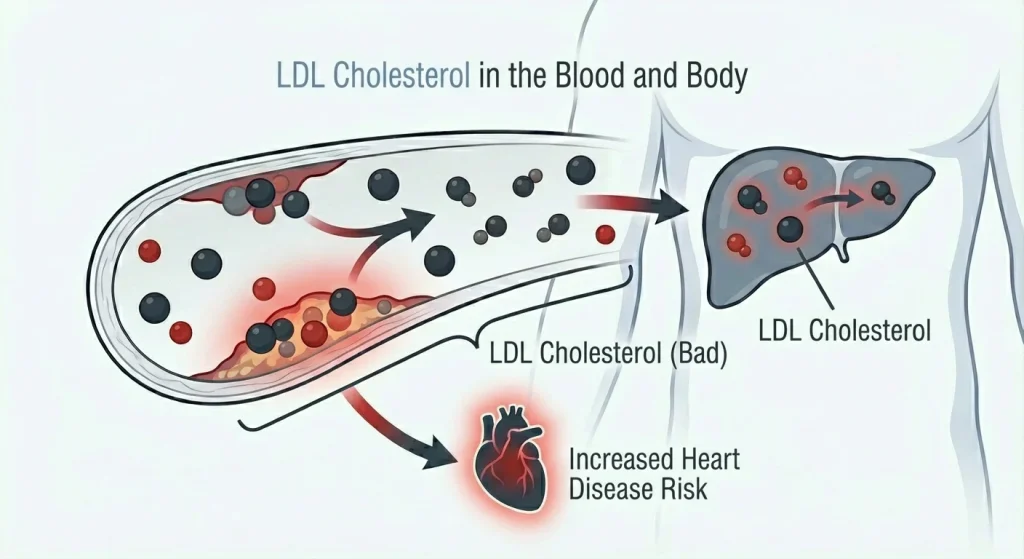
LDL (low-density lipoprotein) is a particle that transports cholesterol from the liver to peripheral tissues throughout your body. Cholesterol is essential for building and maintaining cell membranes, producing steroid hormones (testosterone, estrogen, cortisol), synthesizing vitamin D, creating bile acids for fat digestion, and supporting brain function and neurotransmitter production.
LDL particles are created when VLDL particles (very low-density lipoprotein) release their triglyceride cargo to tissues. As VLDL loses triglycerides, it shrinks and transforms first into IDL (intermediate-density lipoprotein) and then into LDL. Eventually, LDL particles are taken up by the liver and other tissues through LDL receptors, removing them from circulation.
When this system functions properly, LDL delivers necessary cholesterol where it’s needed and gets efficiently cleared from the bloodstream. Problems arise when LDL production exceeds clearance, when LDL particles become small and dense (more likely to penetrate arterial walls), when LDL particles become oxidized (triggering inflammation), or when metabolic dysfunction creates a pro-atherogenic environment.
Standard lipid panels measure LDL cholesterol—the total amount of cholesterol carried within LDL particles. But this measurement obscures critical information. You could have the same LDL cholesterol level with either a few large LDL particles (relatively benign) or many small, dense LDL particles (highly atherogenic). The number of particles and their size matter far more than the total cholesterol content.
Why LDL Matters (And Why It’s Overemphasized)
LDL cholesterol is associated with cardiovascular disease risk—this part is true. Numerous studies show that higher LDL cholesterol correlates with increased heart attack and stroke rates at the population level. Interventions that lower LDL (statins, PCSK9 inhibitors, diet) generally reduce cardiovascular events in high-risk populations.
So LDL clearly matters. But the relationship is more complex than “higher LDL = higher risk” would suggest.
LDL is necessary but not sufficient for atherosclerosis. LDL particles must penetrate the arterial wall, become oxidized, and trigger an inflammatory response to contribute to plaque formation. Large, fluffy LDL particles don’t easily penetrate arterial walls and are relatively benign. Small, dense LDL particles easily penetrate and become trapped, where they oxidize and drive inflammation. You can have high LDL with mostly large particles and low cardiovascular risk, or moderate LDL with mostly small particles and high risk.
Inflammation determines whether LDL becomes problematic. In the absence of arterial inflammation and endothelial dysfunction, LDL particles circulate harmlessly and get cleared normally. It’s only when arterial walls are inflamed (from insulin resistance, smoking, hypertension, oxidative stress, or metabolic dysfunction) that LDL penetration and oxidation become problematic. Measuring inflammatory markers like hs-CRP provides critical context that LDL cholesterol alone cannot.
Metabolic context changes LDL’s significance. LDL cholesterol at 140 mg/dL with high HDL (75 mg/dL), low triglycerides (60 mg/dL), excellent insulin sensitivity, and low inflammation indicates metabolically healthy large LDL particles with relatively low cardiovascular risk. The same LDL cholesterol of 140 mg/dL with low HDL (35 mg/dL), high triglycerides (200 mg/dL), insulin resistance, and elevated inflammation indicates small, dense LDL particles with dramatically higher cardiovascular risk. Treating these two scenarios identically based solely on LDL cholesterol is medical malpractice masquerading as guideline adherence.
LDL particle number matters more than cholesterol content. This is where measuring apolipoprotein B (ApoB) becomes essential. As longevity physician Peter Attia consistently emphasizes, ApoB is a far superior marker to LDL cholesterol for assessing cardiovascular risk. Each atherogenic particle—VLDL, IDL, and LDL—contains exactly one ApoB molecule. By measuring ApoB, you’re counting the actual number of atherogenic particles in your bloodstream, not just the cholesterol they carry.
You can have “normal” LDL cholesterol but high ApoB (many small particles), or elevated LDL cholesterol but normal ApoB (fewer large particles). The former is more dangerous despite lower cholesterol numbers. Studies consistently show that ApoB predicts cardiovascular events better than LDL cholesterol, and when the two disagree (discordant), ApoB is the better predictor.
The obsession with LDL cholesterol to the exclusion of these other factors has led to oversimplified treatment algorithms—if LDL is above X, prescribe a statin—that often miss the actual drivers of cardiovascular risk while medicating people who don’t need it.
Normal vs. Optimal LDL Levels
Here’s where medical guidelines create confusion and controversy.
Standard Reference Ranges and Treatment Targets:
- Optimal: Below 100 mg/dL (some guidelines say below 70 mg/dL for high-risk patients)
- Near optimal: 100-129 mg/dL
- Borderline high: 130-159 mg/dL
- High: 160-189 mg/dL
- Very high: 190+ mg/dL
The Problem With These Targets:
These ranges assume lower LDL is always better, which isn’t necessarily true. They don’t account for LDL particle size, particle number (measured by ApoB), metabolic context, or individual variation in cardiovascular risk. They’ve led to aggressive statin prescribing for people at low absolute risk who may derive minimal benefit while experiencing side effects.
The “optimal” target of below 100 mg/dL came from studies of high-risk populations (people who already had heart attacks) where aggressive LDL lowering reduced subsequent events. Extrapolating this to healthy people without established disease is questionable. Many healthy populations around the world maintain LDL in the 120-140 mg/dL range without excessive cardiovascular disease when other risk factors (inflammation, insulin resistance, smoking, hypertension) are well-controlled.
Furthermore, very low LDL (below 70 mg/dL) achieved through aggressive medication has potential downsides including reduced hormone production (since cholesterol is the precursor for all steroid hormones), cognitive effects in some individuals, and increased hemorrhagic stroke risk in certain populations.
Optimal Range for Performance and Longevity:
The “optimal” LDL depends on numerous individual factors including age, sex, genetic factors, metabolic health, inflammatory status, presence of other risk factors, and personal risk tolerance.
For metabolically healthy individuals without established cardiovascular disease, LDL between 100-130 mg/dL with large, fluffy particles (indicated by low triglycerides and high HDL), low ApoB (below 90 mg/dL), low inflammation (hs-CRP below 1.0 mg/L), and good insulin sensitivity represents a reasonable target that balances cardiovascular protection with avoiding potential downsides of extremely low cholesterol.
For individuals with established cardiovascular disease, strong family history, or multiple risk factors, lower targets (70-100 mg/dL for LDL cholesterol, below 80 mg/dL for ApoB) may be appropriate and have strong evidence supporting benefit.
For individuals with very high LDL (above 190 mg/dL) suggesting genetic factors like familial hypercholesterolemia, aggressive treatment is typically warranted regardless of other risk factors.
The key is comprehensive risk assessment rather than treating a single LDL number in isolation.
What Causes High LDL Cholesterol?
LDL elevation has multiple causes, some genetic and some lifestyle-driven.
Genetic factors play a significant role in determining baseline LDL levels. Familial hypercholesterolemia (FH) is a genetic condition affecting 1 in 250 people, causing very high LDL (often 190-400+ mg/dL) from birth due to defective LDL receptors that can’t efficiently clear LDL from the bloodstream. FH dramatically increases cardiovascular risk and requires aggressive treatment. More commonly, genetic variants in genes affecting LDL production, receptor function, and cholesterol metabolism create variation in how individuals respond to dietary cholesterol and saturated fat—some people’s LDL rises significantly with saturated fat intake (hyper-responders), while others show minimal change.
Dietary factors influence LDL, though effects vary significantly between individuals. Saturated fat intake raises LDL cholesterol in many people, though the response is highly individual and the particles produced are often large, fluffy LDL rather than small, dense. Trans fats from partially hydrogenated oils dramatically worsen LDL profiles (increasing small, dense particles) and should be avoided completely. Dietary cholesterol from eggs, shellfish, etc. has minimal impact on blood cholesterol for most people, though 25-30% of the population are “hyper-responders” whose LDL increases more substantially. Excess refined carbohydrates and sugar don’t directly raise LDL cholesterol but promote insulin resistance and increase small, dense LDL production.
Metabolic dysfunction affects LDL particle composition more than total LDL cholesterol. Insulin resistance shifts LDL particle distribution toward small, dense particles even when total LDL cholesterol remains similar. Obesity and visceral fat promote inflammatory, atherogenic LDL particles. Type 2 diabetes typically produces highly atherogenic LDL despite sometimes normal total LDL cholesterol.
Thyroid function significantly impacts LDL metabolism. Hypothyroidism dramatically reduces LDL receptor activity, preventing efficient LDL clearance and causing LDL to accumulate. Treating thyroid dysfunction often normalizes LDL without additional intervention. Anyone with unexplained LDL elevation should have thyroid function assessed.
Sedentary lifestyle reduces LDL receptor activity and impairs LDL clearance. Regular exercise improves LDL particle size distribution (shifting toward large, fluffy particles) even when total LDL cholesterol doesn’t change dramatically.
Age and sex influence LDL. LDL naturally increases with age in both sexes. Women typically experience significant LDL increases after menopause as protective estrogen declines.
Certain medications including corticosteroids, thiazide diuretics, some beta-blockers, and anabolic steroids can elevate LDL as a side effect.
Kidney disease impairs LDL clearance and alters lipid metabolism, often elevating LDL alongside triglycerides.
LDL Particle Size: Why It Matters More Than You Think
This is where LDL gets interesting and where conventional testing fails most people.
Standard lipid panels measure LDL cholesterol—the total amount of cholesterol carried in LDL particles. But they don’t tell you how many particles you have or what size they are. This distinction is critical.
Large, fluffy LDL particles (Pattern A) are 25-27 nanometers in diameter. They’re too large to easily penetrate the arterial wall. They’re less susceptible to oxidation. They tend to be efficiently cleared by LDL receptors. Multiple studies suggest they have minimal atherogenic potential and may even be protective.
Small, dense LDL particles (Pattern B) are 19-21 nanometers in diameter. They easily penetrate the arterial wall and become trapped in the subendothelial space. They’re highly susceptible to oxidation, triggering inflammatory responses. They bind poorly to LDL receptors and remain in circulation longer. They’re strongly associated with cardiovascular disease independent of total LDL cholesterol.
You can have the same LDL cholesterol (say 130 mg/dL) with either predominantly large particles or predominantly small particles. These are completely different cardiovascular risk profiles that standard testing doesn’t distinguish.
What determines particle size? Triglyceride levels are the primary driver. High triglycerides (above 150 mg/dL) reliably produce small, dense LDL particles. Low triglycerides (below 100 mg/dL) produce large, fluffy LDL particles. This is why the triglyceride-to-HDL ratio is such a powerful predictor of LDL particle size and cardiovascular risk.
Insulin resistance promotes small, dense LDL production even when triglycerides are only moderately elevated. Genetic factors affect how readily someone produces small vs. large particles. High carbohydrate intake, particularly refined carbs, promotes small, dense LDL through its effects on triglycerides and insulin.
Inferring particle size from standard markers: While we don’t directly measure LDL particle size in standard panels, you can infer it from other markers. If triglycerides are below 100 mg/dL and HDL is high, LDL particles are likely large and fluffy. If triglycerides are above 150 mg/dL and HDL is low, LDL particles are likely small and dense. The triglyceride-to-HDL ratio below 2 strongly suggests large LDL particles, while ratios above 3 suggest predominantly small, dense particles.
Apolipoprotein B: The Superior Cardiovascular Risk Marker
This is where understanding cardiovascular risk gets significantly more precise. As Peter Attia and other leading longevity physicians emphasize, apolipoprotein B (ApoB) is a far better marker than LDL cholesterol for assessing true cardiovascular risk.
Why ApoB is superior to LDL cholesterol:
Each atherogenic particle—VLDL, IDL, and LDL—contains exactly one ApoB molecule on its surface. By measuring ApoB, you’re counting the actual number of atherogenic particles in your bloodstream, not just measuring the cholesterol they happen to be carrying.
This distinction matters enormously. You could have 100 mg/dL of LDL cholesterol spread across many small, dense particles (high ApoB, high risk) or the same 100 mg/dL concentrated in fewer large particles (lower ApoB, lower risk). Standard LDL cholesterol measurement can’t distinguish between these scenarios. ApoB can.
The evidence supporting ApoB:
Multiple large studies show ApoB predicts cardiovascular events better than LDL cholesterol. When LDL cholesterol and ApoB are discordant (meaning they tell different stories), ApoB is consistently the better predictor of who actually has heart attacks and strokes. The discordance occurs in approximately 20-30% of people—meaning LDL cholesterol is giving you misleading information about cardiovascular risk in a significant portion of the population.
Peter Attia argues that if you can only measure one lipid-related marker for cardiovascular risk assessment, ApoB is the one to choose. It integrates information about VLDL, IDL, and LDL particle number into a single measurement, providing a comprehensive picture of atherogenic particle burden.
Optimal ApoB levels:
For primary prevention (people without established heart disease), optimal ApoB is generally below 90 mg/dL, ideally below 80 mg/dL. For secondary prevention (people with established cardiovascular disease), targets are often 70 mg/dL or even lower depending on individual risk.
The relationship between ApoB and cardiovascular risk is remarkably linear—the lower your ApoB, the lower your cardiovascular risk, with no apparent threshold where lowering further stops providing benefit. This is different from LDL cholesterol where extremely low levels raise some questions about potential downsides.
ApoB and treatment decisions:
Including ApoB in cardiovascular risk assessment fundamentally changes treatment decisions for many people. Someone with LDL at 140 mg/dL might reflexively receive a statin prescription. But if their ApoB is 75 mg/dL (indicating large particles and low particle number), aggressive LDL lowering may be unnecessary. Conversely, someone with LDL at 100 mg/dL might be told they’re “fine,” but if their ApoB is 110 mg/dL (indicating many small particles), they’re at significantly elevated risk requiring intervention.
This is precision medicine versus population-based algorithms. ApoB allows you to understand your actual atherogenic particle burden rather than making assumptions based on LDL cholesterol alone.
How to Lower LDL Cholesterol and ApoB
Lowering LDL and ApoB requires understanding what’s driving elevation—genetic factors, dietary factors, metabolic dysfunction, or a combination.
Dietary interventions can lower LDL cholesterol and ApoB by 10-30% depending on baseline and adherence. Reduce saturated fat intake, particularly from processed meats, full-fat dairy, and tropical oils (coconut, palm), though individual response varies significantly. Eliminate trans fats completely from partially hydrogenated oils in processed foods. Increase fiber intake, particularly soluble fiber from oats, beans, lentils, vegetables, and fruits—fiber binds cholesterol in the digestive tract and increases excretion. Include plant sterols and stanols from fortified foods or supplements (2g daily can lower LDL by 5-10%). Emphasize whole, unprocessed foods over refined and processed options.
Improve metabolic health to shift LDL particle distribution toward large, fluffy particles and reduce overall particle number. Lower triglycerides through carbohydrate reduction and weight loss—this is one of the most effective ways to reduce small, dense LDL production. Improve insulin sensitivity through exercise, weight loss, and metabolic optimization. Reduce inflammation through anti-inflammatory diet, stress management, and adequate sleep.
Exercise regularly. Both aerobic exercise and resistance training modestly lower LDL cholesterol (typically 5-10%) while significantly improving LDL particle size distribution. Exercise also raises HDL and improves overall cardiovascular health independent of LDL changes.
Weight loss reduces LDL cholesterol and ApoB by 5-10% for every 10 pounds lost, with greater benefits for those who are significantly overweight. Weight loss also improves LDL particle size and overall metabolic health.
Address thyroid function. If hypothyroidism is present, treating it often normalizes LDL and ApoB without additional intervention. Always check thyroid function (TSH, free T4, free T3) when LDL is unexpectedly elevated.
Consider medication when appropriate. For people with very high LDL and ApoB (above 190 mg/dL for LDL, above 120-130 mg/dL for ApoB, suggesting familial hypercholesterolemia), established cardiovascular disease, or high cardiovascular risk despite lifestyle optimization, statins and other LDL-lowering medications have strong evidence supporting benefit. The decision should be based on comprehensive risk assessment including ApoB, not just an LDL number in isolation.
LDL and Metabolic Optimization Treatments
When metabolic dysfunction is contributing to unfavorable LDL particle composition—small, dense particles driven by insulin resistance and elevated triglycerides—targeted interventions can support comprehensive metabolic improvement.
Metformin improves insulin sensitivity, which often shifts LDL particle distribution toward larger, less atherogenic particles and reduces ApoB even when total LDL cholesterol doesn’t change dramatically. By reducing triglycerides and improving metabolic health, metformin addresses the underlying dysfunction that creates dangerous small, dense LDL. This is particularly effective when insulin resistance is driving metabolic dysfunction.
Weight loss medications including GLP-1s (semaglutide, tirzepatide) produce significant metabolic improvements as patients lose weight and reverse insulin resistance. While these medications typically produce modest LDL cholesterol reductions (5-15%), the more important effect is shifting particle distribution toward large, fluffy LDL while dramatically reducing triglycerides and ApoB. The comprehensive metabolic improvements often reduce cardiovascular risk substantially even when LDL cholesterol reduction is modest.
Hormone optimization may influence LDL metabolism when hormonal imbalances contribute to unfavorable lipid profiles. Low testosterone in men is associated with higher LDL cholesterol, higher ApoB, lower HDL, higher triglycerides, and more atherogenic particle distribution. Optimizing testosterone often improves lipid profiles alongside other metabolic benefits. In women, the hormonal changes of menopause typically increase LDL cholesterol and ApoB while worsening particle distribution, and hormone optimization may provide lipid benefits, though effects are variable and individualized.
These interventions are most effective when combined with dietary optimization, exercise, and lifestyle improvements to comprehensively address metabolic dysfunction rather than just targeting LDL in isolation.
LDL and Cardiovascular Risk: The Complete Picture
Comprehensive cardiovascular risk assessment requires looking far beyond LDL cholesterol alone.
Advanced lipid markers including apolipoprotein B (ApoB)—the single best marker for atherogenic particle burden, triglycerides and the triglyceride-to-HDL ratio (revealing particle size and metabolic health), HDL cholesterol, VLDL cholesterol (indicating hepatic fat production), cholesterol/HDL ratio and LDL/HDL ratio (providing relative risk context), and estimated coronary heart disease risk calculated from lipid ratios.
Inflammatory markers including hs-CRP (high-sensitivity C-reactive protein), which independently predicts cardiovascular events. Optimal is below 1.0 mg/L, ideally below 0.5 mg/L. Elevated hs-CRP indicates arterial inflammation that makes LDL particles more likely to penetrate vessel walls and become oxidized.
Metabolic markers including fasting insulin and glucose, hemoglobin A1c, and calculated measures of insulin resistance. Insulin resistance dramatically increases the atherogenicity of any given LDL or ApoB level.
Blood markers including hemoglobin, hematocrit, RBC count, platelets, and RDW (red cell distribution width), which provide context for overall health status and potential cardiovascular implications.
Clinical factors including age, sex, family history of premature cardiovascular disease, smoking status, blood pressure, and presence of diabetes or metabolic syndrome.
Someone with LDL at 150 mg/dL but ApoB at 75 mg/dL, excellent HDL (75 mg/dL), very low triglycerides (50 mg/dL), low hs-CRP (0.3 mg/L), normal insulin sensitivity, no family history, and excellent blood markers may be at very low cardiovascular risk despite elevated LDL. Meanwhile, someone with LDL at 120 mg/dL but ApoB at 110 mg/dL, low HDL (35 mg/dL), high triglycerides (200 mg/dL), elevated hs-CRP (3.0 mg/L), insulin resistance, and strong family history is at dramatically higher risk despite lower LDL.
Treating these two people identically based solely on LDL cholesterol ignores the fundamental differences in their cardiovascular risk profiles.
The Statin Controversy: When Are They Worth It?
Statins are among the most prescribed medications globally, primarily to lower LDL cholesterol and ApoB. But their use remains controversial, particularly for primary prevention (people without established heart disease).
Statins are clearly beneficial for: People with established cardiovascular disease (previous heart attack, stroke, or significant arterial plaque)—this is secondary prevention where benefit is strongest. People with very high LDL and ApoB (above 190 mg/dL for LDL, above 120-130 mg/dL for ApoB) suggesting familial hypercholesterolemia. People with diabetes and additional cardiovascular risk factors. High-risk individuals based on comprehensive assessment including elevated ApoB with other risk factors.
Statins are questionable or controversial for: Healthy people without established disease whose only “problem” is moderately elevated LDL (130-160 mg/dL) but normal or only mildly elevated ApoB. People with elevated LDL but excellent metabolic health (high HDL, low triglycerides, low ApoB, low inflammation, good insulin sensitivity). Elderly individuals (above 75) without established disease—benefit is less clear and side effects more common. People at low absolute risk based on comprehensive assessment despite elevated LDL.
Statin side effects affect a significant percentage of users and include muscle pain, weakness, and fatigue (myalgia) in 10-20% of users, cognitive effects including memory problems in some patients, increased diabetes risk, particularly at higher doses (about 10-12% increased risk), CoQ10 depletion causing fatigue and muscle issues, liver enzyme elevation requiring monitoring, and potential interactions with other medications.
For people at genuinely high cardiovascular risk (elevated ApoB, high hs-CRP, insulin resistance, established disease), statins can be lifesaving—the benefit clearly outweighs the risks. For healthy people with mildly elevated LDL but normal ApoB and otherwise excellent health markers, the benefit-risk calculation is far less clear. Many may derive minimal absolute benefit while experiencing side effects that reduce quality of life.
The decision to use statins should be individualized based on comprehensive risk assessment including ApoB and hs-CRP, absolute risk reduction (not just relative risk), consideration of side effect burden and quality of life, and patient preferences and values.
Frequently Asked Questions
What is a healthy LDL cholesterol level?
There is no single “healthy” LDL level because optimal depends on individual factors including ApoB (particle number), metabolic health, particle size, inflammation, and overall cardiovascular risk. For metabolically healthy individuals without established cardiovascular disease, LDL between 100-130 mg/dL with low ApoB (below 90 mg/dL), large particles (indicated by low triglycerides and high HDL), and low inflammation represents a reasonable target. For people with established disease or very high risk, lower targets (70-100 mg/dL for LDL, below 80 mg/dL for ApoB) may be appropriate.
Can LDL be too low?
Very low LDL (below 50-70 mg/dL) achieved through aggressive medication raises theoretical concerns about reduced hormone production, potential cognitive effects, and increased hemorrhagic stroke risk in some populations. However, some people naturally have very low LDL genetically and remain healthy. The question is whether pharmacologically driving LDL to extremely low levels in people who don’t naturally have low LDL creates problems. This remains somewhat controversial.
How quickly can you lower LDL and ApoB?
LDL and ApoB respond to interventions at different rates. Dietary changes can lower both by 10-30% within 4-8 weeks depending on baseline and adherence. Statins can lower LDL by 20-55% and ApoB by similar amounts within weeks depending on dose and type. Weight loss produces gradual reductions over months. Exercise provides modest reductions (5-10%) over 2-3 months of consistent training.
Does dietary cholesterol raise LDL?
For most people (about 70-75%), dietary cholesterol from eggs, shellfish, etc. has minimal impact on blood LDL cholesterol or ApoB. Your liver regulates production based on intake. However, about 25-30% of people are “hyper-responders” whose LDL increases more substantially with dietary cholesterol. Even in hyper-responders, the increase is often in large, fluffy LDL particles rather than dangerous small, dense particles, and ApoB may not increase proportionally.
Should I avoid saturated fat to lower LDL?
Saturated fat raises LDL cholesterol in many people, though the response varies significantly between individuals based on genetics. Importantly, saturated fat often raises large, fluffy LDL particles rather than small, dense particles, and the effect on ApoB is often less dramatic than the effect on LDL cholesterol. For some people, reducing saturated fat is effective for lowering LDL and ApoB. For others, it has minimal effect. Individual testing and assessment are necessary. Reducing refined carbohydrates is often more effective for improving overall lipid profiles and lowering ApoB than reducing saturated fat alone.
Why is ApoB better than LDL cholesterol?
ApoB counts the actual number of atherogenic particles (VLDL, IDL, LDL) in your bloodstream, while LDL cholesterol only measures the cholesterol carried in LDL particles. You can have the same LDL cholesterol with very different particle numbers. ApoB predicts cardiovascular events better than LDL cholesterol, especially in the 20-30% of people where LDL and ApoB are discordant. As Peter Attia emphasizes, if you can only measure one marker, ApoB provides more accurate cardiovascular risk assessment than LDL cholesterol.
Can exercise lower LDL and ApoB?
Exercise typically lowers LDL cholesterol and ApoB modestly (5-10%) while significantly improving LDL particle size distribution—shifting particles toward large, fluffy type. Exercise also raises HDL, lowers triglycerides, and improves overall cardiovascular health. The lipid improvements from exercise are often more about composition (particle size, HDL increase, triglyceride reduction) than dramatic LDL or ApoB reduction.
Do I need medication if my LDL is over 130 mg/dL?
Not necessarily. The decision should be based on comprehensive cardiovascular risk assessment, not just LDL cholesterol in isolation. Consider your ApoB (more important than LDL cholesterol alone), HDL and triglycerides, inflammatory markers like hs-CRP, insulin sensitivity and metabolic health, family history and genetic factors, presence of established cardiovascular disease, and absolute cardiovascular risk based on comprehensive assessment. Many healthy people with LDL above 130 mg/dL but normal ApoB and excellent metabolic health don’t need medication.
Testing LDL and ApoB With ApexBlood
LDL cholesterol is included in ApexBlood’s comprehensive blood panel as part of the standard lipid assessment, along with apolipoprotein B (ApoB)—the superior marker for cardiovascular risk assessment that most standard panels don’t include.
Our comprehensive testing also includes total cholesterol, triglycerides, HDL cholesterol, VLDL cholesterol, cholesterol/HDL ratio, LDL/HDL ratio, estimated coronary heart disease risk, high-sensitivity C-reactive Protein (hs-CRP) for inflammation assessment, and complete blood count markers (hemoglobin, hematocrit, RBC, platelets, RDW).
This comprehensive approach provides the complete metabolic and cardiovascular context necessary to understand your true risk, not just a single LDL number that tells an incomplete story.
Understanding your LDL in context with ApoB, triglycerides, HDL, inflammatory markers, and metabolic health allows for intelligent decision-making rather than reflexive reactions to a single number. You can’t optimize what you don’t measure, and you certainly can’t understand cardiovascular risk from LDL cholesterol alone.
If you have specific testing needs beyond our standard panel—lipoprotein(a), remnant cholesterol, advanced inflammatory markers, or other specialized cardiovascular markers—our physicians have access to over 2,000 lab partners nationwide and can order virtually any test available. Schedule a free consultation with our care team to discuss custom blood panel options at competitive pricing.
Get comprehensive testing including ApoB for $189
The Bottom Line on LDL Cholesterol
LDL cholesterol matters for cardiovascular health, but the oversimplified narrative of “high LDL bad, low LDL good” misses critical nuance. What actually matters is LDL particle number (measured by ApoB), particle size (inferred from triglycerides and HDL), metabolic context, inflammatory status, and comprehensive cardiovascular risk assessment.
You could have LDL at 150 mg/dL and be at low cardiovascular risk if ApoB is normal (below 90 mg/dL), particles are large (low triglycerides, high HDL), inflammation is minimal (low hs-CRP), and metabolic health is excellent. You could have LDL at 110 mg/dL and be at high cardiovascular risk if ApoB is elevated (above 100 mg/dL), particles are small and dense (high triglycerides, low HDL), inflammation is elevated, and insulin resistance is present.
As Peter Attia and other leading longevity physicians emphasize, ApoB is the single best lipid-related marker for cardiovascular risk. It counts atherogenic particles directly rather than just measuring cholesterol content. If your testing includes ApoB, pay attention to it—it’s telling you more about your cardiovascular risk than LDL cholesterol alone ever could.
Stop obsessing over LDL cholesterol in isolation. Start focusing on comprehensive metabolic optimization—improve insulin sensitivity, reduce inflammation, optimize body composition, lower triglycerides, raise HDL, reduce ApoB, and address the root causes of cardiovascular risk.
High performers don’t make health decisions based on single biomarkers and population-based treatment algorithms. They test comprehensively, understand context, and optimize strategically based on their individual biology.
You can’t optimize what you don’t measure. Stop accepting oversimplified LDL narratives when comprehensive assessment including ApoB reveals the complete picture.
Medical Disclaimer: This information is for educational purposes and does not constitute medical advice. LDL cholesterol and metabolic health require evaluation by qualified healthcare providers. Never make treatment decisions based solely on internet information. Always consult licensed medical professionals for diagnosis and treatment.