
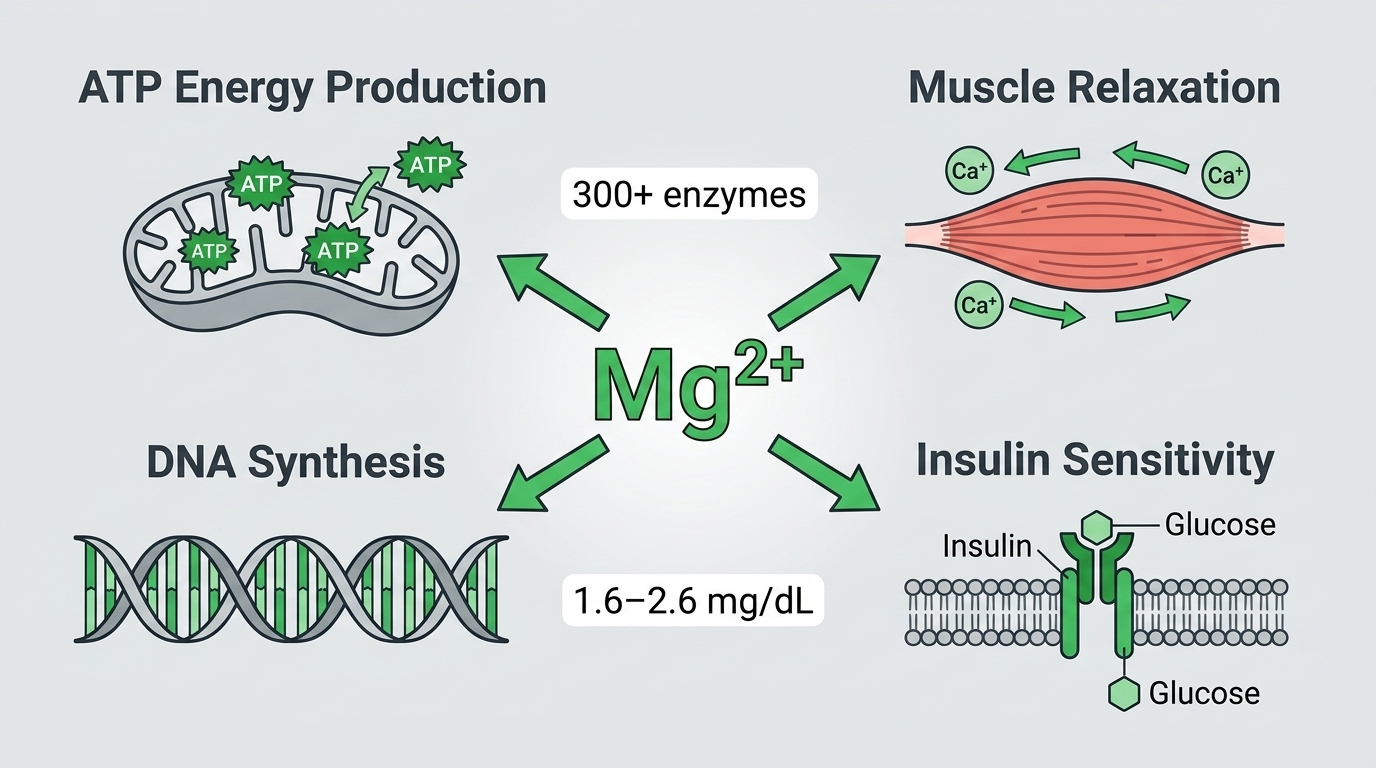
Magnesium is involved in over 300 enzymatic reactions in your body. It is essential for ATP production (the actual energy currency your cells use), DNA synthesis, protein synthesis, muscle and nerve function, blood glucose control, and blood pressure regulation. It is also one of the most commonly deficient minerals in the modern diet, with estimates suggesting 50-80% of Americans consume less than the recommended intake. Despite this prevalence and its outsized role in performance and health, magnesium is routinely ignored in standard blood panels – and when it is tested, the most common test used (serum magnesium) is a poor indicator of total body magnesium status. Understanding your magnesium status and optimizing it is one of the highest-leverage nutritional interventions available for performance, sleep, and longevity.
What Is Serum Magnesium?
Serum magnesium is the measurement of magnesium circulating in your blood plasma. Only about 1% of your body’s total magnesium is found in the blood – the remaining 99% is stored inside cells (particularly muscle and liver cells) and in bone. This distribution creates a significant diagnostic limitation: serum magnesium can appear normal even when intracellular magnesium is significantly depleted. Your body maintains serum magnesium within a narrow range by pulling magnesium from intracellular stores when blood levels dip – similar to how serum calcium is maintained at the expense of bone calcium.
This means that a “normal” serum magnesium does not rule out magnesium insufficiency affecting your muscle function, energy production, sleep quality, or cardiovascular health. More sensitive tests like RBC (red blood cell) magnesium or 24-hour urine magnesium better reflect true body magnesium status. Serum magnesium remains clinically useful for identifying significant hypomagnesemia and for monitoring in clinical settings, but high performers who want to optimize magnesium should not rely solely on serum magnesium to declare themselves “fine.”
Why Magnesium Matters for Performance and Longevity
Every ATP molecule in your body – the universal energy currency that powers cellular work – must be bound to magnesium to be biologically active. Without adequate magnesium, your mitochondria cannot efficiently produce or utilize energy. This fundamental role in energy metabolism means magnesium insufficiency affects virtually every energy-dependent process: exercise capacity, cognitive function, cardiac rhythm, blood sugar regulation, and sleep architecture.
Magnesium is also essential for muscle relaxation – calcium drives muscle contraction, magnesium drives relaxation. Without adequate magnesium, muscles have difficulty fully relaxing after contraction, contributing to cramping, tightness, and impaired recovery. In cardiac muscle, this matters for rhythm regulation – magnesium deficiency is associated with cardiac arrhythmias. In smooth muscle, it affects blood pressure – magnesium acts as a natural calcium channel blocker, relaxing blood vessel walls. For athletes and high performers, optimal magnesium means better energy production, faster recovery, better sleep quality, lower blood pressure, and more stable blood sugar regulation. These are not marginal gains – they are foundational performance drivers.
Normal vs. Optimal Magnesium Levels
Standard Reference Ranges: Most laboratories report serum magnesium as normal between 1.7 and 2.4 mg/dL (or 0.7-1.0 mmol/L). These ranges identify clinically significant hypomagnesemia – levels low enough to cause symptoms like muscle spasms, arrhythmias, and neuromuscular dysfunction – not levels optimal for performance.
The Problem With “Normal”: A serum magnesium of 1.8 mg/dL and a serum magnesium of 2.3 mg/dL are both “normal.” They may reflect meaningfully different total body magnesium status, since serum magnesium is maintained at the expense of intracellular stores. More importantly, people at the lower end of the reference range often experience performance-relevant symptoms – fatigue, muscle cramps, poor sleep, anxiety, and impaired glucose regulation – that resolve with magnesium optimization even though they were never flagged as “deficient.” The absence of flagged deficiency does not mean you are optimized.
Optimal Magnesium for Performance: For serum magnesium, aiming for the upper half of the reference range (2.1-2.4 mg/dL) is a reasonable target. RBC magnesium, when available, provides a better picture of tissue stores – optimal RBC magnesium typically falls between 5.5 and 6.8 mg/dL, though reference ranges vary by lab. If you are experiencing symptoms consistent with magnesium insufficiency – muscle cramps, poor sleep, anxiety, fatigue, frequent headaches – a magnesium optimization trial is often worthwhile even if serum magnesium appears normal.
Symptoms of Magnesium Insufficiency
Mild to moderate magnesium insufficiency produces a constellation of symptoms that are extremely common in high performers but often attributed to other causes: muscle cramps and spasms (especially nocturnal leg cramps), poor sleep quality and difficulty achieving deep sleep, anxiety and difficulty managing stress, headaches and migraines (magnesium deficiency is one of the best-studied triggers), fatigue disproportionate to activity level, heart palpitations and irregular heartbeat, constipation, brain fog and difficulty concentrating, and blood pressure trending upward over time. More severe deficiency causes tetany (sustained muscle spasms), severe arrhythmias, and seizures in extreme cases. The challenge is that many of these symptoms overlap with other conditions, and because serum magnesium can appear normal despite tissue depletion, magnesium is often missed as a contributor.
What Causes Low Magnesium?
Inadequate dietary intake is the most common cause. Processed foods are stripped of magnesium during refining – white flour, for example, has lost roughly 80% of its magnesium compared to whole wheat. Modern agricultural soils are depleted of magnesium compared to historical levels, reducing the magnesium content of plants. High sugar intake increases urinary magnesium excretion. Alcohol causes significant magnesium losses through increased renal excretion. Coffee and caffeine have mild diuretic effects that increase magnesium losses. Stress chronically depletes magnesium – the stress response increases magnesium excretion and magnesium itself is needed to manage the stress response, creating a vicious cycle. Proton pump inhibitors (acid reducers) significantly impair magnesium absorption and are a major cause of hypomagnesemia in people on long-term acid suppression. Type 2 diabetes and insulin resistance impair magnesium renal reabsorption. Heavy exercise increases magnesium demands and losses through sweat, making athletes particularly vulnerable to insufficiency despite seemingly adequate diets.
How to Optimize Magnesium
Dietary magnesium comes from leafy green vegetables (chlorophyll contains magnesium), legumes, nuts and seeds (pumpkin seeds, almonds, cashews are excellent sources), whole grains, dark chocolate, and avocado. Prioritizing these foods is the foundation. For supplementation – which is often necessary given how common dietary insufficiency is – form matters significantly. Magnesium glycinate (bisglycinate) is highly bioavailable, gentle on the gut, and well-suited for sleep and stress support. Magnesium malate is another well-absorbed form with energy-supporting properties. Magnesium oxide, despite being the most common supplement form, has very poor bioavailability (around 4%) and is largely a waste of money for anything beyond constipation relief. Magnesium citrate has decent absorption and works well but has a laxative effect at higher doses. Transdermal magnesium (oils and lotions) may provide some benefit for localized muscle issues. Typical supplementation doses range from 200-400 mg of elemental magnesium daily, taken in the evening where possible since magnesium supports sleep quality through its role in GABA receptor function.
Magnesium and Metabolic Health
Magnesium and insulin sensitivity are deeply connected. Insulin resistance increases renal magnesium excretion, depleting magnesium stores. Low magnesium impairs insulin receptor signaling, worsening insulin resistance. This bidirectional relationship means that metabolic dysfunction and magnesium insufficiency tend to reinforce each other. Addressing both simultaneously – through dietary improvement, magnesium repletion, and metabolic health optimization – produces better outcomes than addressing either alone. For people on metformin for metabolic management, monitoring magnesium is important since metformin may slightly reduce magnesium absorption with long-term use. For those pursuing GLP-1 weight loss treatments, magnesium monitoring is valuable during periods of significant weight loss and dietary change when electrolyte status can shift.
Frequently Asked Questions
Is serum magnesium an accurate test for magnesium status?
It is useful but limited. Because only 1% of body magnesium is in blood, serum magnesium is maintained at the expense of intracellular stores. You can have significant tissue magnesium depletion with a serum magnesium that appears normal. RBC magnesium is a better indicator of cellular stores. The most accurate assessment is a 24-hour urine magnesium after a loading dose, but this is rarely practical in clinical settings. If symptoms suggest magnesium insufficiency and serum magnesium is low-normal, a supplementation trial is clinically reasonable.
What is the best form of magnesium supplement?
Magnesium glycinate (bisglycinate) is the top choice for most people – high bioavailability, excellent tolerability, and well-suited for sleep and stress support. Magnesium malate is good for energy support. Magnesium citrate works well but has a dose-dependent laxative effect. Magnesium threonate has been specifically studied for cognitive benefits due to its ability to cross the blood-brain barrier. Avoid magnesium oxide – it has approximately 4% bioavailability and is primarily useful only as a laxative.
Can too much magnesium be harmful?
From food, excess magnesium is rare because the kidneys efficiently excrete it. From supplements, excess magnesium typically causes diarrhea and GI distress at doses above 350-400 mg per day for most people – the body’s way of preventing accumulation. In people with kidney disease, magnesium excretion is impaired and supplementation can accumulate to dangerous levels, so kidney disease is a contraindication to significant magnesium supplementation without medical supervision.
Does magnesium help with sleep?
Yes, meaningfully. Magnesium activates GABA receptors, the primary inhibitory neurotransmitter system responsible for calming neural activity and facilitating sleep. Multiple studies show that magnesium supplementation – particularly magnesium glycinate – improves sleep quality, reduces time to fall asleep, and increases deep sleep duration, especially in people who are magnesium-insufficient. Taking 200-400 mg of magnesium glycinate 30-60 minutes before bed is one of the most evidence-supported sleep interventions available without a prescription.
Does magnesium affect blood pressure?
Yes. Magnesium acts as a natural calcium channel blocker – it relaxes vascular smooth muscle, reducing peripheral resistance and blood pressure. Meta-analyses consistently show that magnesium supplementation produces modest but meaningful reductions in blood pressure, particularly in hypertensive individuals and those who are magnesium-deficient. The effect is not dramatic (typically 2-4 mmHg reduction in systolic pressure) but is clinically relevant when sustained over time and combined with other lifestyle interventions.
Testing Magnesium With ApexBlood
Magnesium is included in ApexBlood’s comprehensive blood panel alongside calcium, potassium, vitamin D, and metabolic markers that provide the full picture of your mineral and metabolic status. If your magnesium is low or at the lower end of normal, our physicians can discuss supplementation strategies and investigate underlying causes – from dietary inadequacy to medication effects to metabolic drivers – based on your complete profile.
You cannot optimize what you do not measure. If you are experiencing fatigue, poor sleep, muscle cramps, or high stress without a clear explanation, magnesium status is one of the first places to look.
Get comprehensive testing for $189
The Bottom Line on Magnesium
Magnesium is involved in over 300 enzymatic reactions and is essential for energy production, muscle function, sleep quality, blood pressure regulation, and blood sugar control. It is also one of the most commonly insufficient minerals in modern populations, yet routinely ignored or inadequately tested. A normal serum magnesium does not mean your magnesium status is optimized – it means the tightly regulated serum compartment is being maintained, possibly at the expense of intracellular stores. The performance implications of magnesium insufficiency are substantial and often underappreciated.
Test comprehensively, optimize your mineral status proactively, and do not wait for severe deficiency symptoms before acting. Stop accepting “normal” when optimal is possible.
Medical Disclaimer: This information is for educational purposes and does not constitute medical advice. Magnesium and mineral status require evaluation by qualified healthcare providers. Never make treatment decisions based solely on internet information. Always consult licensed medical professionals for diagnosis and treatment.